How AI and Human Expertise Work Together
How AI and Human Expertise Work Together
How AI and Human Expertise Work Together
AI doesn't replace dermatologists — it amplifies them. Explore the hybrid intelligence model that's making expert diagnosis faster, more accurate, and universally accessible.
AI doesn't replace dermatologists — it amplifies them. Explore the hybrid intelligence model that's making expert diagnosis faster, more accurate, and universally accessible.
AI doesn't replace dermatologists — it amplifies them. Explore the hybrid intelligence model that's making expert diagnosis faster, more accurate, and universally accessible.
December 19, 2025
December 19, 2025
December 19, 2025
"Will AI replace doctors?"
It's a question that dominates healthcare discussions — and understandably so. As artificial intelligence demonstrates remarkable capabilities in medical imaging, diagnosis, and treatment planning, concerns about automation replacing human expertise are natural.
But in dermatology, the question misses the point entirely.
AI isn't replacing dermatologists. It's amplifying their reach, improving their accuracy, and making their expertise accessible to communities that have waited far too long for solutions.
At Skinmed, we've built our entire platform on a simple principle: technology serves medicine, medicine serves people. Our hybrid intelligence model combines the speed and pattern recognition of AI with the clinical judgment and compassionate care that only human experts can provide.
This is the story of how AI and human expertise work together — and why that collaboration is transforming dermatology access worldwide.
The Problem: A Global Shortage of Specialists
Before exploring solutions, we need to understand the crisis.
The numbers are stark:
France: 5.9 dermatologists per 100,000 people (declining 9% over 10 years)
United States: Projected shortage of 10,000+ dermatologists by 2030
Average wait times: 95+ days for a dermatology appointment in urban areas, 120+ days in rural communities
Global reality: 35% of all cancers are skin-related, yet access to screening remains a privilege, not a right
The dermatology bottleneck isn't just inconvenient — it's deadly. Suspicious lesions progress while calendars fill. Treatable Stage 0 melanomas become life-threatening Stage III cancers simply because patients couldn't see a specialist in time.
Traditional solutions don't scale. Medical education takes years. Geographic disparities persist. The specialist-to-patient ratio continues to worsen.
Technology offers a different path forward.
Why Dermatology Is Uniquely Suited for AI
Not all medical specialties benefit equally from AI assistance. Dermatology, however, is remarkably well-suited for algorithmic support.
Here's why:
1. Visual Data
Dermatology is fundamentally a visual discipline. Diagnosis relies heavily on what doctors see — lesion shape, color, borders, texture, patterns. Unlike internal medicine, where symptoms are abstract and multifaceted, skin conditions present concrete, photographable evidence.
This visual nature makes dermatology ideal for machine learning, which excels at pattern recognition in images.
2. Standardized Imaging
Dermoscopy — the use of specialized magnification and lighting to examine skin lesions — creates standardized, high-quality images. These consistent imaging conditions allow AI algorithms to learn from vast datasets without the variability that plagues other imaging modalities.
3. Large Training Datasets
Decades of dermoscopy imaging have produced enormous databases of labeled skin lesions. Researchers have compiled hundreds of thousands of images with confirmed diagnoses, creating the training data necessary for robust AI systems.
4. Clear Decision Points
While nuanced, dermatological diagnosis often involves clear binary or categorical decisions: benign or malignant, melanoma or nevus, basal cell or squamous cell. These well-defined categories suit algorithmic classification.
5. Urgent Need
The specialist shortage is severe. Any tool that helps triage cases, flag suspicious lesions, or support non-specialist providers addresses a critical healthcare gap.
But advantages don't eliminate limitations.
The Limits of Pure AI Diagnosis
Despite dermatology's suitability for AI, algorithmic diagnosis alone faces significant challenges:
Edge Cases and Rare Conditions
AI systems trained on common presentations struggle with unusual cases. A lesion that doesn't match learned patterns may be misclassified — potentially missing rare but dangerous cancers.
Human experts recognize atypical presentations through clinical experience and contextual understanding that algorithms lack.
Patient Context Matters
Diagnosis isn't just about what a lesion looks like — it's about the patient's history, risk factors, previous skin changes, family history, and symptoms. AI sees an image. Dermatologists see a person.
Example: A rapidly changing mole in a 25-year-old with family history of melanoma requires different consideration than an identical-appearing mole in a 70-year-old with no risk factors.
Medical-Legal Responsibility
Who is liable if an AI misses a melanoma? Current regulatory frameworks require human physicians to take ultimate responsibility for diagnoses. Pure AI systems create liability gaps that healthcare systems cannot accept.
Patient Trust and Communication
Receiving a cancer diagnosis is deeply emotional. Patients need explanation, reassurance, guidance — human connection that algorithms cannot provide. A diagnosis without context is data, not care.
Regulatory Requirements
Medical device regulations worldwide require rigorous validation, ongoing monitoring, and clear accountability. Pure AI diagnostic systems face significant regulatory hurdles that hybrid human-AI models can navigate more effectively.
The solution isn't AI or humans. It's AI and humans.
The Hybrid Intelligence Model: Best of Both Worlds
Skinmed's platform demonstrates how AI and human expertise complement each other to deliver superior outcomes.
Here's how it works:
Stage 1: Medical-Grade Image Acquisition
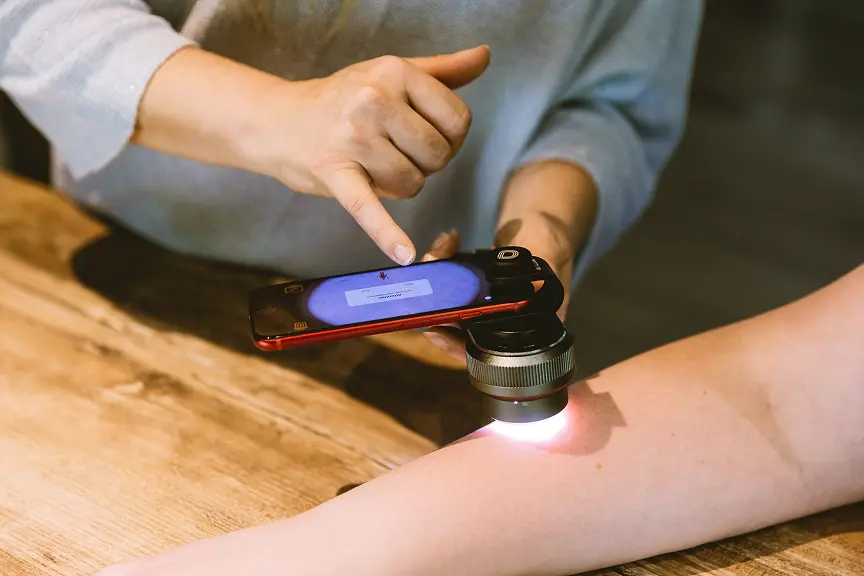
The technology: Patients visit Skinmed-enabled pharmacies where trained pharmacists use medical-grade dermoscopes connected to smartphones. These devices capture high-definition images with 10-20x magnification, polarized lighting, and standardized conditions.
Why it matters: Quality input is essential. Our imaging protocol ensures AI receives the same caliber images that dermatologists analyze in clinical practice.
The human element: Pharmacists conduct brief patient interviews, document medical history, and note any symptoms (itching, bleeding, pain). This contextual information accompanies images to dermatologists.
Stage 2: AI-Powered Pre-Screening
The technology: Images are analyzed by Skinan, our AI algorithm developed through 15+ years of CNRS research and trained on over 100,000 clinically validated dermatological images.
What the AI does:
Identifies lesion boundaries and characteristics
Classifies lesions into risk categories (benign, suspicious, high-risk)
Flags patterns associated with melanoma, basal cell carcinoma, squamous cell carcinoma
Generates confidence scores for its assessments
Provides preliminary risk stratification: Green (benign), Yellow (minor treatment), Orange (specialist needed), Red (urgent evaluation)
What the AI doesn't do:
Make final diagnoses
Communicate with patients
Override dermatologist decisions
Operate autonomously
Why it matters: AI pre-screening accelerates triage. It helps pharmacists provide immediate guidance (e.g., "This looks benign, but we'll have a dermatologist confirm"). It ensures high-risk cases are flagged for priority review.
Critical design choice: Our AI results are visible only to pharmacists for guidance. Dermatologists reviewing cases never see the AI's recommendation on their interface — ensuring unbiased human expert judgment.
Stage 3: Board-Certified Dermatologist Validation
The human expertise: Every case is reviewed by board-certified dermatologists registered with medical authorities (RPPS in France, equivalent credentials in other markets).
What dermatologists receive:
High-definition dermoscopy images from multiple angles
Patient medical history and risk factors
Pharmacist observations and patient-reported symptoms
Image metadata (location, size, timing)
What dermatologists don't see:
AI pre-screening results or recommendations
Why this matters: Keeping AI recommendations hidden from dermatologists prevents anchoring bias. Instead of confirming or refuting the AI's suggestion, dermatologists form independent clinical judgments.
The dermatologist's role:
Comprehensive image analysis using ABCDE criteria and clinical experience
Differential diagnosis consideration
Risk assessment accounting for patient context
Treatment recommendations and care pathway guidance
Referral coordination when specialist care is needed
Quality assurance: Dermatologists sign off on diagnoses under their medical license and carry full professional liability insurance.
Stage 4: Care Coordination and Follow-Up
The human touch continues: Results are delivered to patients through pharmacies, not impersonal emails. Pharmacists explain findings, answer questions, and provide guidance in accessible language.
For high-risk cases (orange/red classifications):
Dedicated nursing team proactively contacts patients within 48-72 hours
Specialist appointments are coordinated
Care pathways are explained and supported
Follow-up is ensured
Why it matters: A diagnosis without a pathway forward isn't care — it's data. Our human care coordinators ensure patients understand next steps and actually receive necessary treatment.
Why the Hybrid Model Works Better
The combination of AI and human expertise delivers outcomes neither could achieve alone:
Speed + Accuracy
AI processes images in seconds, enabling rapid preliminary assessment. Human experts provide the nuanced judgment that prevents errors.
Result: Expert diagnosis in under 72 hours, maintaining clinical-grade accuracy.
Accessibility + Quality
AI enables deployment through 600+ pharmacy locations, bringing screening to underserved communities. Board-certified dermatologists ensure every diagnosis meets rigorous clinical standards.
Result: Universal access without compromising care quality.
Efficiency + Compassion
AI handles pattern recognition and data processing. Humans provide context, empathy, and guidance.
Result: Dermatologists focus time on complex cases and patient communication, not administrative tasks.
Scalability + Accountability
AI allows one dermatologist to effectively serve many more patients. Human experts maintain medical-legal responsibility and ethical oversight.
Result: Massive scale without regulatory or liability concerns.
Real-World Performance: The Evidence
Hybrid intelligence isn't theoretical — it's proven through clinical validation.
Skinmed's 2024 Clinical Study demonstrated concordance between our platform's diagnoses, in-person dermatology consultations, and pathology results (gold standard). Key findings:
Sensitivity for melanoma detection: Comparable to in-person screening
Specificity: AI-human hybrid reduced false positives compared to pure AI
Diagnostic agreement: High concordance with histopathological results
Patient outcomes: Multiple cases of early-stage detection preventing progression
What this means: The hybrid model isn't just convenient — it's clinically effective.
The Technology Behind Skinan AI
Understanding our AI requires understanding its origins.
15+ Years of Development
Skinan wasn't built overnight. It emerged from CNRS (France's National Center for Scientific Research) programs beginning in 1999, led by Dr. Bernard Fertil, former Director of Research.
Development timeline:
1999-2010: Initial research on melanoma image analysis and machine learning classification
2010-2016: Algorithm refinement, dataset expansion, clinical validation studies
2016: ANAPIX Medical founded to commercialize the technology
2019: CE Mark certification for SkinApp diagnostic application
2016-Present: Continuous learning and improvement from real-world deployment
Training Data
Skinan was trained on over 100,000 clinically validated dermoscopic images including:
Melanomas at various stages
Benign nevi (moles)
Basal cell carcinomas
Squamous cell carcinomas
Dysplastic nevi
Various other dermatological conditions
Data sources: Collaborations with dermatology departments across France and Europe, ensuring diverse patient populations and lesion presentations.
Architecture
Convolutional Neural Networks (CNN): Deep learning models specifically designed for image analysis, capable of learning hierarchical feature representations.
Key capabilities:
Pattern recognition across multiple scales
Color and texture analysis
Border irregularity detection
Multi-class classification (20+ condition types)
Confidence scoring and uncertainty quantification
Continuous Improvement
Unlike static diagnostic tools, AI systems improve with use. Every Skinmed screening contributes to algorithmic refinement (with appropriate consent and de-identification).
Feedback loops:
Dermatologist diagnoses inform algorithm updates
Pathology results validate and improve predictions
Edge cases expand the training dataset
Performance monitoring identifies areas for enhancement
Regulatory Landscape: AI as a Medical Device
Medical AI isn't unregulated software — it's a medical device subject to rigorous oversight.
Current status:
Europe: Skinan AI is pursuing Medical Device Regulation (MDR) Class IIb certification
United States: FDA clearance track for AI-based diagnostic support systems
Data privacy: Full GDPR compliance (Europe), HIPAA-ready architecture (U.S.)
What this means: Skinmed's AI meets the same safety and efficacy standards as traditional medical devices, with ongoing post-market surveillance ensuring continued performance.
Regulatory advantages of hybrid models:
Clear human accountability (physician makes final diagnosis)
AI positioned as decision support, not autonomous diagnosis
Easier regulatory pathway than fully autonomous systems
Flexible framework for continuous improvement
Addressing Concerns: AI Ethics in Healthcare
Deploying AI in medical diagnosis raises legitimate ethical questions. Here's how Skinmed addresses them:
Bias and Fairness
Concern: AI trained on limited populations may perform poorly on underrepresented groups.
Our approach: Training datasets include diverse skin types (Fitzpatrick Types I-VI), ages, and lesion presentations. Continuous monitoring for performance disparities across demographic groups.
Transparency
Concern: "Black box" AI systems make decisions without explanation.
Our approach: While full algorithmic transparency isn't feasible with complex neural networks, we provide:
Confidence scores indicating AI certainty
Visual heatmaps showing regions of interest
Clear documentation of training data and validation studies
Accountability
Concern: Who is responsible when AI contributes to a misdiagnosis?
Our approach: Unambiguous human accountability. Board-certified dermatologists make all final diagnoses under their medical license. AI provides assistance, not decisions.
Patient Consent
Concern: Patients should know when AI is involved in their care.
Our approach: Full transparency. Patients are informed that AI assists in triage, but diagnoses come from human dermatologists. Opt-in consent for data use in algorithm improvement.
Data Security
Concern: Medical images are sensitive personal data requiring protection.
Our approach:
End-to-end encryption
GDPR/HIPAA-compliant data handling
Secure server infrastructure
Data minimization principles
Patient rights to access, correction, and deletion
The Future: What Comes Next?
The hybrid intelligence model is just beginning to realize its potential.
Near-term developments (2025-2027):
Expanded capabilities: Beyond melanoma detection to comprehensive skin condition diagnosis (eczema, psoriasis, acne, infections, inflammatory conditions)
Longitudinal tracking: AI-powered comparison of lesions over time, automatically flagging changes that warrant attention
Predictive models: Risk scoring based on patient history, genetics, and lesion characteristics to prioritize screening intervals
Integration: Direct connectivity with electronic health records for seamless care coordination
Global scale: Deployment beyond France to U.S., UK, and other markets facing dermatology shortages
Long-term vision:
Personalized screening protocols: AI-driven recommendations for optimal screening frequency based on individual risk profiles
Automated total body photography: Full-body imaging systems that automatically track every mole, alerting to changes
Genomic integration: Combining image analysis with genetic risk markers for comprehensive melanoma risk assessment
Teledermoscopy evolution: Home-use devices allowing patients to perform preliminary screenings with AI guidance, escalating to professionals when needed
Global health impact: Making dermatology expertise accessible in low-resource settings where specialists are virtually nonexistent
Why This Matters: Beyond Technology
The hybrid intelligence model isn't just about cool technology — it's about healthcare equity.
Consider Maria, 52, living in rural Dordogne. The nearest dermatologist is 90 kilometers away with a 4-month waitlist. When she notices a changing mole, her options are:
Traditional path:
Schedule GP appointment (2-3 weeks wait)
Receive dermatologist referral
Wait 4+ months for specialist appointment
Travel 90km for consultation
If biopsy needed, additional visits and delays
Skinmed path:
Walk into local pharmacy (5 minutes)
High-definition screening (5 minutes)
Expert dermatologist review (within 72 hours)
If needed, specialist referral coordinated immediately
The technology difference is measured in weeks. The human impact is measured in lives saved.
This is why hybrid intelligence matters. Not because AI is impressive, but because it makes expert care accessible to everyone — regardless of geography, wait times, or specialist availability.
Conclusion: Partnership, Not Replacement
Will AI replace dermatologists? No.
Will AI amplify dermatologists' reach, improve their efficiency, and make their expertise accessible to millions currently underserved? Absolutely.
The future of dermatology isn't human or machine. It's human and machine, working together in complementary roles:
AI excels at:
Processing thousands of images rapidly
Pattern recognition across vast datasets
Consistent application of learned criteria
Tireless 24/7 availability
Scalable deployment
Humans excel at:
Contextual understanding
Nuanced clinical judgment
Rare case recognition
Patient communication
Ethical decision-making
Compassionate care
Together, they deliver:
Faster diagnosis
Broader access
Maintained accuracy
Improved outcomes
Patient-centered care
At Skinmed, we're not building technology to replace doctors. We're building technology to ensure everyone has access to the doctors we need.
Because healthcare innovation isn't about disruption — it's about service.
Experience Hybrid Intelligence
Ready to see how AI-enhanced dermatology works?
Disclaimer: This article discusses Skinmed's technology for informational purposes. AI-assisted diagnosis should always be validated by licensed medical professionals. For medical advice, consult a board-certified dermatologist.
"Will AI replace doctors?"
It's a question that dominates healthcare discussions — and understandably so. As artificial intelligence demonstrates remarkable capabilities in medical imaging, diagnosis, and treatment planning, concerns about automation replacing human expertise are natural.
But in dermatology, the question misses the point entirely.
AI isn't replacing dermatologists. It's amplifying their reach, improving their accuracy, and making their expertise accessible to communities that have waited far too long for solutions.
At Skinmed, we've built our entire platform on a simple principle: technology serves medicine, medicine serves people. Our hybrid intelligence model combines the speed and pattern recognition of AI with the clinical judgment and compassionate care that only human experts can provide.
This is the story of how AI and human expertise work together — and why that collaboration is transforming dermatology access worldwide.
The Problem: A Global Shortage of Specialists
Before exploring solutions, we need to understand the crisis.
The numbers are stark:
France: 5.9 dermatologists per 100,000 people (declining 9% over 10 years)
United States: Projected shortage of 10,000+ dermatologists by 2030
Average wait times: 95+ days for a dermatology appointment in urban areas, 120+ days in rural communities
Global reality: 35% of all cancers are skin-related, yet access to screening remains a privilege, not a right
The dermatology bottleneck isn't just inconvenient — it's deadly. Suspicious lesions progress while calendars fill. Treatable Stage 0 melanomas become life-threatening Stage III cancers simply because patients couldn't see a specialist in time.
Traditional solutions don't scale. Medical education takes years. Geographic disparities persist. The specialist-to-patient ratio continues to worsen.
Technology offers a different path forward.
Why Dermatology Is Uniquely Suited for AI
Not all medical specialties benefit equally from AI assistance. Dermatology, however, is remarkably well-suited for algorithmic support.
Here's why:
1. Visual Data
Dermatology is fundamentally a visual discipline. Diagnosis relies heavily on what doctors see — lesion shape, color, borders, texture, patterns. Unlike internal medicine, where symptoms are abstract and multifaceted, skin conditions present concrete, photographable evidence.
This visual nature makes dermatology ideal for machine learning, which excels at pattern recognition in images.
2. Standardized Imaging
Dermoscopy — the use of specialized magnification and lighting to examine skin lesions — creates standardized, high-quality images. These consistent imaging conditions allow AI algorithms to learn from vast datasets without the variability that plagues other imaging modalities.
3. Large Training Datasets
Decades of dermoscopy imaging have produced enormous databases of labeled skin lesions. Researchers have compiled hundreds of thousands of images with confirmed diagnoses, creating the training data necessary for robust AI systems.
4. Clear Decision Points
While nuanced, dermatological diagnosis often involves clear binary or categorical decisions: benign or malignant, melanoma or nevus, basal cell or squamous cell. These well-defined categories suit algorithmic classification.
5. Urgent Need
The specialist shortage is severe. Any tool that helps triage cases, flag suspicious lesions, or support non-specialist providers addresses a critical healthcare gap.
But advantages don't eliminate limitations.
The Limits of Pure AI Diagnosis
Despite dermatology's suitability for AI, algorithmic diagnosis alone faces significant challenges:
Edge Cases and Rare Conditions
AI systems trained on common presentations struggle with unusual cases. A lesion that doesn't match learned patterns may be misclassified — potentially missing rare but dangerous cancers.
Human experts recognize atypical presentations through clinical experience and contextual understanding that algorithms lack.
Patient Context Matters
Diagnosis isn't just about what a lesion looks like — it's about the patient's history, risk factors, previous skin changes, family history, and symptoms. AI sees an image. Dermatologists see a person.
Example: A rapidly changing mole in a 25-year-old with family history of melanoma requires different consideration than an identical-appearing mole in a 70-year-old with no risk factors.
Medical-Legal Responsibility
Who is liable if an AI misses a melanoma? Current regulatory frameworks require human physicians to take ultimate responsibility for diagnoses. Pure AI systems create liability gaps that healthcare systems cannot accept.
Patient Trust and Communication
Receiving a cancer diagnosis is deeply emotional. Patients need explanation, reassurance, guidance — human connection that algorithms cannot provide. A diagnosis without context is data, not care.
Regulatory Requirements
Medical device regulations worldwide require rigorous validation, ongoing monitoring, and clear accountability. Pure AI diagnostic systems face significant regulatory hurdles that hybrid human-AI models can navigate more effectively.
The solution isn't AI or humans. It's AI and humans.
The Hybrid Intelligence Model: Best of Both Worlds
Skinmed's platform demonstrates how AI and human expertise complement each other to deliver superior outcomes.
Here's how it works:
Stage 1: Medical-Grade Image Acquisition
The technology: Patients visit Skinmed-enabled pharmacies where trained pharmacists use medical-grade dermoscopes connected to smartphones. These devices capture high-definition images with 10-20x magnification, polarized lighting, and standardized conditions.
Why it matters: Quality input is essential. Our imaging protocol ensures AI receives the same caliber images that dermatologists analyze in clinical practice.
The human element: Pharmacists conduct brief patient interviews, document medical history, and note any symptoms (itching, bleeding, pain). This contextual information accompanies images to dermatologists.
Stage 2: AI-Powered Pre-Screening
The technology: Images are analyzed by Skinan, our AI algorithm developed through 15+ years of CNRS research and trained on over 100,000 clinically validated dermatological images.
What the AI does:
Identifies lesion boundaries and characteristics
Classifies lesions into risk categories (benign, suspicious, high-risk)
Flags patterns associated with melanoma, basal cell carcinoma, squamous cell carcinoma
Generates confidence scores for its assessments
Provides preliminary risk stratification: Green (benign), Yellow (minor treatment), Orange (specialist needed), Red (urgent evaluation)
What the AI doesn't do:
Make final diagnoses
Communicate with patients
Override dermatologist decisions
Operate autonomously
Why it matters: AI pre-screening accelerates triage. It helps pharmacists provide immediate guidance (e.g., "This looks benign, but we'll have a dermatologist confirm"). It ensures high-risk cases are flagged for priority review.
Critical design choice: Our AI results are visible only to pharmacists for guidance. Dermatologists reviewing cases never see the AI's recommendation on their interface — ensuring unbiased human expert judgment.
Stage 3: Board-Certified Dermatologist Validation
The human expertise: Every case is reviewed by board-certified dermatologists registered with medical authorities (RPPS in France, equivalent credentials in other markets).
What dermatologists receive:
High-definition dermoscopy images from multiple angles
Patient medical history and risk factors
Pharmacist observations and patient-reported symptoms
Image metadata (location, size, timing)
What dermatologists don't see:
AI pre-screening results or recommendations
Why this matters: Keeping AI recommendations hidden from dermatologists prevents anchoring bias. Instead of confirming or refuting the AI's suggestion, dermatologists form independent clinical judgments.
The dermatologist's role:
Comprehensive image analysis using ABCDE criteria and clinical experience
Differential diagnosis consideration
Risk assessment accounting for patient context
Treatment recommendations and care pathway guidance
Referral coordination when specialist care is needed
Quality assurance: Dermatologists sign off on diagnoses under their medical license and carry full professional liability insurance.
Stage 4: Care Coordination and Follow-Up
The human touch continues: Results are delivered to patients through pharmacies, not impersonal emails. Pharmacists explain findings, answer questions, and provide guidance in accessible language.
For high-risk cases (orange/red classifications):
Dedicated nursing team proactively contacts patients within 48-72 hours
Specialist appointments are coordinated
Care pathways are explained and supported
Follow-up is ensured
Why it matters: A diagnosis without a pathway forward isn't care — it's data. Our human care coordinators ensure patients understand next steps and actually receive necessary treatment.
Why the Hybrid Model Works Better
The combination of AI and human expertise delivers outcomes neither could achieve alone:
Speed + Accuracy
AI processes images in seconds, enabling rapid preliminary assessment. Human experts provide the nuanced judgment that prevents errors.
Result: Expert diagnosis in under 72 hours, maintaining clinical-grade accuracy.
Accessibility + Quality
AI enables deployment through 600+ pharmacy locations, bringing screening to underserved communities. Board-certified dermatologists ensure every diagnosis meets rigorous clinical standards.
Result: Universal access without compromising care quality.
Efficiency + Compassion
AI handles pattern recognition and data processing. Humans provide context, empathy, and guidance.
Result: Dermatologists focus time on complex cases and patient communication, not administrative tasks.
Scalability + Accountability
AI allows one dermatologist to effectively serve many more patients. Human experts maintain medical-legal responsibility and ethical oversight.
Result: Massive scale without regulatory or liability concerns.
Real-World Performance: The Evidence
Hybrid intelligence isn't theoretical — it's proven through clinical validation.
Skinmed's 2024 Clinical Study demonstrated concordance between our platform's diagnoses, in-person dermatology consultations, and pathology results (gold standard). Key findings:
Sensitivity for melanoma detection: Comparable to in-person screening
Specificity: AI-human hybrid reduced false positives compared to pure AI
Diagnostic agreement: High concordance with histopathological results
Patient outcomes: Multiple cases of early-stage detection preventing progression
What this means: The hybrid model isn't just convenient — it's clinically effective.
The Technology Behind Skinan AI
Understanding our AI requires understanding its origins.
15+ Years of Development
Skinan wasn't built overnight. It emerged from CNRS (France's National Center for Scientific Research) programs beginning in 1999, led by Dr. Bernard Fertil, former Director of Research.
Development timeline:
1999-2010: Initial research on melanoma image analysis and machine learning classification
2010-2016: Algorithm refinement, dataset expansion, clinical validation studies
2016: ANAPIX Medical founded to commercialize the technology
2019: CE Mark certification for SkinApp diagnostic application
2016-Present: Continuous learning and improvement from real-world deployment
Training Data
Skinan was trained on over 100,000 clinically validated dermoscopic images including:
Melanomas at various stages
Benign nevi (moles)
Basal cell carcinomas
Squamous cell carcinomas
Dysplastic nevi
Various other dermatological conditions
Data sources: Collaborations with dermatology departments across France and Europe, ensuring diverse patient populations and lesion presentations.
Architecture
Convolutional Neural Networks (CNN): Deep learning models specifically designed for image analysis, capable of learning hierarchical feature representations.
Key capabilities:
Pattern recognition across multiple scales
Color and texture analysis
Border irregularity detection
Multi-class classification (20+ condition types)
Confidence scoring and uncertainty quantification
Continuous Improvement
Unlike static diagnostic tools, AI systems improve with use. Every Skinmed screening contributes to algorithmic refinement (with appropriate consent and de-identification).
Feedback loops:
Dermatologist diagnoses inform algorithm updates
Pathology results validate and improve predictions
Edge cases expand the training dataset
Performance monitoring identifies areas for enhancement
Regulatory Landscape: AI as a Medical Device
Medical AI isn't unregulated software — it's a medical device subject to rigorous oversight.
Current status:
Europe: Skinan AI is pursuing Medical Device Regulation (MDR) Class IIb certification
United States: FDA clearance track for AI-based diagnostic support systems
Data privacy: Full GDPR compliance (Europe), HIPAA-ready architecture (U.S.)
What this means: Skinmed's AI meets the same safety and efficacy standards as traditional medical devices, with ongoing post-market surveillance ensuring continued performance.
Regulatory advantages of hybrid models:
Clear human accountability (physician makes final diagnosis)
AI positioned as decision support, not autonomous diagnosis
Easier regulatory pathway than fully autonomous systems
Flexible framework for continuous improvement
Addressing Concerns: AI Ethics in Healthcare
Deploying AI in medical diagnosis raises legitimate ethical questions. Here's how Skinmed addresses them:
Bias and Fairness
Concern: AI trained on limited populations may perform poorly on underrepresented groups.
Our approach: Training datasets include diverse skin types (Fitzpatrick Types I-VI), ages, and lesion presentations. Continuous monitoring for performance disparities across demographic groups.
Transparency
Concern: "Black box" AI systems make decisions without explanation.
Our approach: While full algorithmic transparency isn't feasible with complex neural networks, we provide:
Confidence scores indicating AI certainty
Visual heatmaps showing regions of interest
Clear documentation of training data and validation studies
Accountability
Concern: Who is responsible when AI contributes to a misdiagnosis?
Our approach: Unambiguous human accountability. Board-certified dermatologists make all final diagnoses under their medical license. AI provides assistance, not decisions.
Patient Consent
Concern: Patients should know when AI is involved in their care.
Our approach: Full transparency. Patients are informed that AI assists in triage, but diagnoses come from human dermatologists. Opt-in consent for data use in algorithm improvement.
Data Security
Concern: Medical images are sensitive personal data requiring protection.
Our approach:
End-to-end encryption
GDPR/HIPAA-compliant data handling
Secure server infrastructure
Data minimization principles
Patient rights to access, correction, and deletion
The Future: What Comes Next?
The hybrid intelligence model is just beginning to realize its potential.
Near-term developments (2025-2027):
Expanded capabilities: Beyond melanoma detection to comprehensive skin condition diagnosis (eczema, psoriasis, acne, infections, inflammatory conditions)
Longitudinal tracking: AI-powered comparison of lesions over time, automatically flagging changes that warrant attention
Predictive models: Risk scoring based on patient history, genetics, and lesion characteristics to prioritize screening intervals
Integration: Direct connectivity with electronic health records for seamless care coordination
Global scale: Deployment beyond France to U.S., UK, and other markets facing dermatology shortages
Long-term vision:
Personalized screening protocols: AI-driven recommendations for optimal screening frequency based on individual risk profiles
Automated total body photography: Full-body imaging systems that automatically track every mole, alerting to changes
Genomic integration: Combining image analysis with genetic risk markers for comprehensive melanoma risk assessment
Teledermoscopy evolution: Home-use devices allowing patients to perform preliminary screenings with AI guidance, escalating to professionals when needed
Global health impact: Making dermatology expertise accessible in low-resource settings where specialists are virtually nonexistent
Why This Matters: Beyond Technology
The hybrid intelligence model isn't just about cool technology — it's about healthcare equity.
Consider Maria, 52, living in rural Dordogne. The nearest dermatologist is 90 kilometers away with a 4-month waitlist. When she notices a changing mole, her options are:
Traditional path:
Schedule GP appointment (2-3 weeks wait)
Receive dermatologist referral
Wait 4+ months for specialist appointment
Travel 90km for consultation
If biopsy needed, additional visits and delays
Skinmed path:
Walk into local pharmacy (5 minutes)
High-definition screening (5 minutes)
Expert dermatologist review (within 72 hours)
If needed, specialist referral coordinated immediately
The technology difference is measured in weeks. The human impact is measured in lives saved.
This is why hybrid intelligence matters. Not because AI is impressive, but because it makes expert care accessible to everyone — regardless of geography, wait times, or specialist availability.
Conclusion: Partnership, Not Replacement
Will AI replace dermatologists? No.
Will AI amplify dermatologists' reach, improve their efficiency, and make their expertise accessible to millions currently underserved? Absolutely.
The future of dermatology isn't human or machine. It's human and machine, working together in complementary roles:
AI excels at:
Processing thousands of images rapidly
Pattern recognition across vast datasets
Consistent application of learned criteria
Tireless 24/7 availability
Scalable deployment
Humans excel at:
Contextual understanding
Nuanced clinical judgment
Rare case recognition
Patient communication
Ethical decision-making
Compassionate care
Together, they deliver:
Faster diagnosis
Broader access
Maintained accuracy
Improved outcomes
Patient-centered care
At Skinmed, we're not building technology to replace doctors. We're building technology to ensure everyone has access to the doctors we need.
Because healthcare innovation isn't about disruption — it's about service.
Experience Hybrid Intelligence
Ready to see how AI-enhanced dermatology works?
Disclaimer: This article discusses Skinmed's technology for informational purposes. AI-assisted diagnosis should always be validated by licensed medical professionals. For medical advice, consult a board-certified dermatologist.
"Will AI replace doctors?"
It's a question that dominates healthcare discussions — and understandably so. As artificial intelligence demonstrates remarkable capabilities in medical imaging, diagnosis, and treatment planning, concerns about automation replacing human expertise are natural.
But in dermatology, the question misses the point entirely.
AI isn't replacing dermatologists. It's amplifying their reach, improving their accuracy, and making their expertise accessible to communities that have waited far too long for solutions.
At Skinmed, we've built our entire platform on a simple principle: technology serves medicine, medicine serves people. Our hybrid intelligence model combines the speed and pattern recognition of AI with the clinical judgment and compassionate care that only human experts can provide.
This is the story of how AI and human expertise work together — and why that collaboration is transforming dermatology access worldwide.
The Problem: A Global Shortage of Specialists
Before exploring solutions, we need to understand the crisis.
The numbers are stark:
France: 5.9 dermatologists per 100,000 people (declining 9% over 10 years)
United States: Projected shortage of 10,000+ dermatologists by 2030
Average wait times: 95+ days for a dermatology appointment in urban areas, 120+ days in rural communities
Global reality: 35% of all cancers are skin-related, yet access to screening remains a privilege, not a right
The dermatology bottleneck isn't just inconvenient — it's deadly. Suspicious lesions progress while calendars fill. Treatable Stage 0 melanomas become life-threatening Stage III cancers simply because patients couldn't see a specialist in time.
Traditional solutions don't scale. Medical education takes years. Geographic disparities persist. The specialist-to-patient ratio continues to worsen.
Technology offers a different path forward.
Why Dermatology Is Uniquely Suited for AI
Not all medical specialties benefit equally from AI assistance. Dermatology, however, is remarkably well-suited for algorithmic support.
Here's why:
1. Visual Data
Dermatology is fundamentally a visual discipline. Diagnosis relies heavily on what doctors see — lesion shape, color, borders, texture, patterns. Unlike internal medicine, where symptoms are abstract and multifaceted, skin conditions present concrete, photographable evidence.
This visual nature makes dermatology ideal for machine learning, which excels at pattern recognition in images.
2. Standardized Imaging
Dermoscopy — the use of specialized magnification and lighting to examine skin lesions — creates standardized, high-quality images. These consistent imaging conditions allow AI algorithms to learn from vast datasets without the variability that plagues other imaging modalities.
3. Large Training Datasets
Decades of dermoscopy imaging have produced enormous databases of labeled skin lesions. Researchers have compiled hundreds of thousands of images with confirmed diagnoses, creating the training data necessary for robust AI systems.
4. Clear Decision Points
While nuanced, dermatological diagnosis often involves clear binary or categorical decisions: benign or malignant, melanoma or nevus, basal cell or squamous cell. These well-defined categories suit algorithmic classification.
5. Urgent Need
The specialist shortage is severe. Any tool that helps triage cases, flag suspicious lesions, or support non-specialist providers addresses a critical healthcare gap.
But advantages don't eliminate limitations.
The Limits of Pure AI Diagnosis
Despite dermatology's suitability for AI, algorithmic diagnosis alone faces significant challenges:
Edge Cases and Rare Conditions
AI systems trained on common presentations struggle with unusual cases. A lesion that doesn't match learned patterns may be misclassified — potentially missing rare but dangerous cancers.
Human experts recognize atypical presentations through clinical experience and contextual understanding that algorithms lack.
Patient Context Matters
Diagnosis isn't just about what a lesion looks like — it's about the patient's history, risk factors, previous skin changes, family history, and symptoms. AI sees an image. Dermatologists see a person.
Example: A rapidly changing mole in a 25-year-old with family history of melanoma requires different consideration than an identical-appearing mole in a 70-year-old with no risk factors.
Medical-Legal Responsibility
Who is liable if an AI misses a melanoma? Current regulatory frameworks require human physicians to take ultimate responsibility for diagnoses. Pure AI systems create liability gaps that healthcare systems cannot accept.
Patient Trust and Communication
Receiving a cancer diagnosis is deeply emotional. Patients need explanation, reassurance, guidance — human connection that algorithms cannot provide. A diagnosis without context is data, not care.
Regulatory Requirements
Medical device regulations worldwide require rigorous validation, ongoing monitoring, and clear accountability. Pure AI diagnostic systems face significant regulatory hurdles that hybrid human-AI models can navigate more effectively.
The solution isn't AI or humans. It's AI and humans.
The Hybrid Intelligence Model: Best of Both Worlds
Skinmed's platform demonstrates how AI and human expertise complement each other to deliver superior outcomes.
Here's how it works:
Stage 1: Medical-Grade Image Acquisition
The technology: Patients visit Skinmed-enabled pharmacies where trained pharmacists use medical-grade dermoscopes connected to smartphones. These devices capture high-definition images with 10-20x magnification, polarized lighting, and standardized conditions.
Why it matters: Quality input is essential. Our imaging protocol ensures AI receives the same caliber images that dermatologists analyze in clinical practice.
The human element: Pharmacists conduct brief patient interviews, document medical history, and note any symptoms (itching, bleeding, pain). This contextual information accompanies images to dermatologists.
Stage 2: AI-Powered Pre-Screening
The technology: Images are analyzed by Skinan, our AI algorithm developed through 15+ years of CNRS research and trained on over 100,000 clinically validated dermatological images.
What the AI does:
Identifies lesion boundaries and characteristics
Classifies lesions into risk categories (benign, suspicious, high-risk)
Flags patterns associated with melanoma, basal cell carcinoma, squamous cell carcinoma
Generates confidence scores for its assessments
Provides preliminary risk stratification: Green (benign), Yellow (minor treatment), Orange (specialist needed), Red (urgent evaluation)
What the AI doesn't do:
Make final diagnoses
Communicate with patients
Override dermatologist decisions
Operate autonomously
Why it matters: AI pre-screening accelerates triage. It helps pharmacists provide immediate guidance (e.g., "This looks benign, but we'll have a dermatologist confirm"). It ensures high-risk cases are flagged for priority review.
Critical design choice: Our AI results are visible only to pharmacists for guidance. Dermatologists reviewing cases never see the AI's recommendation on their interface — ensuring unbiased human expert judgment.
Stage 3: Board-Certified Dermatologist Validation
The human expertise: Every case is reviewed by board-certified dermatologists registered with medical authorities (RPPS in France, equivalent credentials in other markets).
What dermatologists receive:
High-definition dermoscopy images from multiple angles
Patient medical history and risk factors
Pharmacist observations and patient-reported symptoms
Image metadata (location, size, timing)
What dermatologists don't see:
AI pre-screening results or recommendations
Why this matters: Keeping AI recommendations hidden from dermatologists prevents anchoring bias. Instead of confirming or refuting the AI's suggestion, dermatologists form independent clinical judgments.
The dermatologist's role:
Comprehensive image analysis using ABCDE criteria and clinical experience
Differential diagnosis consideration
Risk assessment accounting for patient context
Treatment recommendations and care pathway guidance
Referral coordination when specialist care is needed
Quality assurance: Dermatologists sign off on diagnoses under their medical license and carry full professional liability insurance.
Stage 4: Care Coordination and Follow-Up
The human touch continues: Results are delivered to patients through pharmacies, not impersonal emails. Pharmacists explain findings, answer questions, and provide guidance in accessible language.
For high-risk cases (orange/red classifications):
Dedicated nursing team proactively contacts patients within 48-72 hours
Specialist appointments are coordinated
Care pathways are explained and supported
Follow-up is ensured
Why it matters: A diagnosis without a pathway forward isn't care — it's data. Our human care coordinators ensure patients understand next steps and actually receive necessary treatment.
Why the Hybrid Model Works Better
The combination of AI and human expertise delivers outcomes neither could achieve alone:
Speed + Accuracy
AI processes images in seconds, enabling rapid preliminary assessment. Human experts provide the nuanced judgment that prevents errors.
Result: Expert diagnosis in under 72 hours, maintaining clinical-grade accuracy.
Accessibility + Quality
AI enables deployment through 600+ pharmacy locations, bringing screening to underserved communities. Board-certified dermatologists ensure every diagnosis meets rigorous clinical standards.
Result: Universal access without compromising care quality.
Efficiency + Compassion
AI handles pattern recognition and data processing. Humans provide context, empathy, and guidance.
Result: Dermatologists focus time on complex cases and patient communication, not administrative tasks.
Scalability + Accountability
AI allows one dermatologist to effectively serve many more patients. Human experts maintain medical-legal responsibility and ethical oversight.
Result: Massive scale without regulatory or liability concerns.
Real-World Performance: The Evidence
Hybrid intelligence isn't theoretical — it's proven through clinical validation.
Skinmed's 2024 Clinical Study demonstrated concordance between our platform's diagnoses, in-person dermatology consultations, and pathology results (gold standard). Key findings:
Sensitivity for melanoma detection: Comparable to in-person screening
Specificity: AI-human hybrid reduced false positives compared to pure AI
Diagnostic agreement: High concordance with histopathological results
Patient outcomes: Multiple cases of early-stage detection preventing progression
What this means: The hybrid model isn't just convenient — it's clinically effective.
The Technology Behind Skinan AI
Understanding our AI requires understanding its origins.
15+ Years of Development
Skinan wasn't built overnight. It emerged from CNRS (France's National Center for Scientific Research) programs beginning in 1999, led by Dr. Bernard Fertil, former Director of Research.
Development timeline:
1999-2010: Initial research on melanoma image analysis and machine learning classification
2010-2016: Algorithm refinement, dataset expansion, clinical validation studies
2016: ANAPIX Medical founded to commercialize the technology
2019: CE Mark certification for SkinApp diagnostic application
2016-Present: Continuous learning and improvement from real-world deployment
Training Data
Skinan was trained on over 100,000 clinically validated dermoscopic images including:
Melanomas at various stages
Benign nevi (moles)
Basal cell carcinomas
Squamous cell carcinomas
Dysplastic nevi
Various other dermatological conditions
Data sources: Collaborations with dermatology departments across France and Europe, ensuring diverse patient populations and lesion presentations.
Architecture
Convolutional Neural Networks (CNN): Deep learning models specifically designed for image analysis, capable of learning hierarchical feature representations.
Key capabilities:
Pattern recognition across multiple scales
Color and texture analysis
Border irregularity detection
Multi-class classification (20+ condition types)
Confidence scoring and uncertainty quantification
Continuous Improvement
Unlike static diagnostic tools, AI systems improve with use. Every Skinmed screening contributes to algorithmic refinement (with appropriate consent and de-identification).
Feedback loops:
Dermatologist diagnoses inform algorithm updates
Pathology results validate and improve predictions
Edge cases expand the training dataset
Performance monitoring identifies areas for enhancement
Regulatory Landscape: AI as a Medical Device
Medical AI isn't unregulated software — it's a medical device subject to rigorous oversight.
Current status:
Europe: Skinan AI is pursuing Medical Device Regulation (MDR) Class IIb certification
United States: FDA clearance track for AI-based diagnostic support systems
Data privacy: Full GDPR compliance (Europe), HIPAA-ready architecture (U.S.)
What this means: Skinmed's AI meets the same safety and efficacy standards as traditional medical devices, with ongoing post-market surveillance ensuring continued performance.
Regulatory advantages of hybrid models:
Clear human accountability (physician makes final diagnosis)
AI positioned as decision support, not autonomous diagnosis
Easier regulatory pathway than fully autonomous systems
Flexible framework for continuous improvement
Addressing Concerns: AI Ethics in Healthcare
Deploying AI in medical diagnosis raises legitimate ethical questions. Here's how Skinmed addresses them:
Bias and Fairness
Concern: AI trained on limited populations may perform poorly on underrepresented groups.
Our approach: Training datasets include diverse skin types (Fitzpatrick Types I-VI), ages, and lesion presentations. Continuous monitoring for performance disparities across demographic groups.
Transparency
Concern: "Black box" AI systems make decisions without explanation.
Our approach: While full algorithmic transparency isn't feasible with complex neural networks, we provide:
Confidence scores indicating AI certainty
Visual heatmaps showing regions of interest
Clear documentation of training data and validation studies
Accountability
Concern: Who is responsible when AI contributes to a misdiagnosis?
Our approach: Unambiguous human accountability. Board-certified dermatologists make all final diagnoses under their medical license. AI provides assistance, not decisions.
Patient Consent
Concern: Patients should know when AI is involved in their care.
Our approach: Full transparency. Patients are informed that AI assists in triage, but diagnoses come from human dermatologists. Opt-in consent for data use in algorithm improvement.
Data Security
Concern: Medical images are sensitive personal data requiring protection.
Our approach:
End-to-end encryption
GDPR/HIPAA-compliant data handling
Secure server infrastructure
Data minimization principles
Patient rights to access, correction, and deletion
The Future: What Comes Next?
The hybrid intelligence model is just beginning to realize its potential.
Near-term developments (2025-2027):
Expanded capabilities: Beyond melanoma detection to comprehensive skin condition diagnosis (eczema, psoriasis, acne, infections, inflammatory conditions)
Longitudinal tracking: AI-powered comparison of lesions over time, automatically flagging changes that warrant attention
Predictive models: Risk scoring based on patient history, genetics, and lesion characteristics to prioritize screening intervals
Integration: Direct connectivity with electronic health records for seamless care coordination
Global scale: Deployment beyond France to U.S., UK, and other markets facing dermatology shortages
Long-term vision:
Personalized screening protocols: AI-driven recommendations for optimal screening frequency based on individual risk profiles
Automated total body photography: Full-body imaging systems that automatically track every mole, alerting to changes
Genomic integration: Combining image analysis with genetic risk markers for comprehensive melanoma risk assessment
Teledermoscopy evolution: Home-use devices allowing patients to perform preliminary screenings with AI guidance, escalating to professionals when needed
Global health impact: Making dermatology expertise accessible in low-resource settings where specialists are virtually nonexistent
Why This Matters: Beyond Technology
The hybrid intelligence model isn't just about cool technology — it's about healthcare equity.
Consider Maria, 52, living in rural Dordogne. The nearest dermatologist is 90 kilometers away with a 4-month waitlist. When she notices a changing mole, her options are:
Traditional path:
Schedule GP appointment (2-3 weeks wait)
Receive dermatologist referral
Wait 4+ months for specialist appointment
Travel 90km for consultation
If biopsy needed, additional visits and delays
Skinmed path:
Walk into local pharmacy (5 minutes)
High-definition screening (5 minutes)
Expert dermatologist review (within 72 hours)
If needed, specialist referral coordinated immediately
The technology difference is measured in weeks. The human impact is measured in lives saved.
This is why hybrid intelligence matters. Not because AI is impressive, but because it makes expert care accessible to everyone — regardless of geography, wait times, or specialist availability.
Conclusion: Partnership, Not Replacement
Will AI replace dermatologists? No.
Will AI amplify dermatologists' reach, improve their efficiency, and make their expertise accessible to millions currently underserved? Absolutely.
The future of dermatology isn't human or machine. It's human and machine, working together in complementary roles:
AI excels at:
Processing thousands of images rapidly
Pattern recognition across vast datasets
Consistent application of learned criteria
Tireless 24/7 availability
Scalable deployment
Humans excel at:
Contextual understanding
Nuanced clinical judgment
Rare case recognition
Patient communication
Ethical decision-making
Compassionate care
Together, they deliver:
Faster diagnosis
Broader access
Maintained accuracy
Improved outcomes
Patient-centered care
At Skinmed, we're not building technology to replace doctors. We're building technology to ensure everyone has access to the doctors we need.
Because healthcare innovation isn't about disruption — it's about service.
Experience Hybrid Intelligence
Ready to see how AI-enhanced dermatology works?
Disclaimer: This article discusses Skinmed's technology for informational purposes. AI-assisted diagnosis should always be validated by licensed medical professionals. For medical advice, consult a board-certified dermatologist.
— Jennifer Gauthier, CEO & Co-Founder
— Jennifer Gauthier, CEO & Co-Founder
— Jennifer Gauthier, CEO & Co-Founder
our journal
our journal
our journal
More insights for you.
More insights for you.
More insights for you.
Explore more reflections, guidance, and practical tools to support your growth and well-being.
Explore more reflections, guidance, and practical tools to support your growth and well-being.
Explore more reflections, guidance, and practical tools to support your growth and well-being.

Join us in January as we showcase how AI-enhanced telehealth is democratizing dermatology — from the world's largest tech event to healthcare's premier investment symposium.
Join us in January as we showcase how AI-enhanced telehealth is democratizing dermatology — from the world's largest tech event to healthcare's premier investment symposium.
Join us in January as we showcase how AI-enhanced telehealth is democratizing dermatology — from the world's largest tech event to healthcare's premier investment symposium.
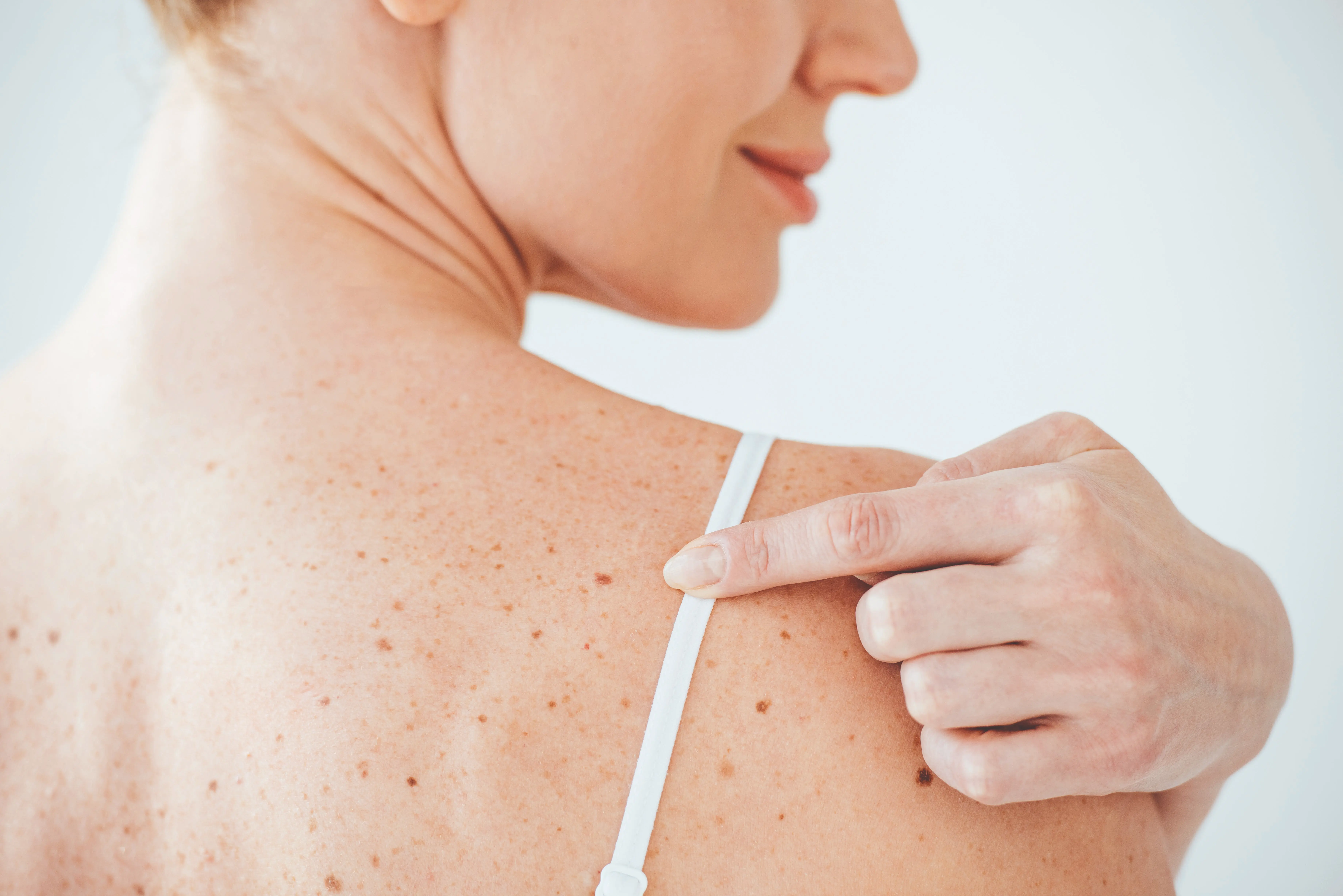
Early detection saves lives. Learn the five warning signs dermatologists use to identify suspicious lesions — and why regular skin self-exams matter more than you think.
Early detection saves lives. Learn the five warning signs dermatologists use to identify suspicious lesions — and why regular skin self-exams matter more than you think.
Early detection saves lives. Learn the five warning signs dermatologists use to identify suspicious lesions — and why regular skin self-exams matter more than you think.
Your questions.
Answered.
Not sure where to start? These answers might help you feel more confident as you begin.
Didn’t find your answer? Send us a message — we’ll respond with care and clarity.
How does Skinmed work?
Skinmed makes expert dermatology accessible through your local pharmacy. Simply visit a Skinmed-enabled location where a trained pharmacist will capture high-definition images of your skin concern using medical-grade equipment. Your images are securely transmitted to board-certified dermatologists who review every case and provide a detailed report within 48 hours.
If specialist care is needed, we coordinate referrals and follow-up. No appointments, no long waits — just accessible expert care when you need it.
How does Skinmed work?
Skinmed makes expert dermatology accessible through your local pharmacy. Simply visit a Skinmed-enabled location where a trained pharmacist will capture high-definition images of your skin concern using medical-grade equipment. Your images are securely transmitted to board-certified dermatologists who review every case and provide a detailed report within 48 hours.
If specialist care is needed, we coordinate referrals and follow-up. No appointments, no long waits — just accessible expert care when you need it.
Is Skinmed available in my area?
Is Skinmed available in my area?
Skinmed currently operates through 1000+ partner pharmacies across France, with rapid expansion underway.
US pilot programs are launching in 2026. To find a Skinmed-enabled pharmacy near you or to express interest in bringing Skinmed to your community, contact us directly.
How accurate is the diagnosis?
How accurate is the diagnosis?
Every Skinmed diagnosis undergoes mandatory review by board-certified dermatologists registered with medical authorities. Our AI-powered pre-screening assists triage, but 100% of final diagnoses are validated by human experts.
Our 2024 clinical study demonstrates concordance between Skinmed diagnoses, in-person dermatology consultations, and pathology results.
Quality and accuracy are never compromised for speed.
What conditions can Skinmed screen for?
What conditions can Skinmed screen for?
Skinmed screens for a wide range of skin conditions including:
Melanoma and other skin cancers (basal cell, squamous cell)
Pre-cancerous lesions (actinic keratosis)
Atypical moles requiring monitoring
Common dermatological conditions (eczema, psoriasis, rosacea)
Suspicious lesions requiring specialist evaluation
Our platform provides risk-stratified recommendations: routine monitoring, primary care follow-up, dermatologist consultation, or urgent specialist referral.
What is Skinmed's regulatory status?
What is Skinmed's regulatory status?
Skinmed operates as a GDPR-compliant telehealth platform in France.
All dermatologists are licensed and registered with French medical authorities (RPPS).
The AI technology (developed by ANAPIX Medical) is currently pursuing FDA Class IIb device MDR (2017/745) certification targeted for Q2. The AI technology is not cleared by the FDA for clinical diagnostic use in the USA.
Skinmed dermatology platform is considered non-medical MDDS.
Our platform already meets strict European data protection standards and follows clinical best practices for telehealth delivery.
Where can we meet the Skinmed team?
Where can we meet the Skinmed team?
Join us at these upcoming events in January 2026:
🎯 CES 2026 - Las Vegas
January 6-9, 2026
Digital Health Summit
Meet us at the world's premier technology event to explore how Skinmed is democratizing dermatology through AI-enhanced telehealth.
💼 J.P. Morgan Healthcare Conference - San Francisco
January 12-15, 2026
44th Annual Healthcare Investment Symposium
Schedule a meeting to discuss investment opportunities, partnership strategies, and our global expansion roadmap.
Your questions.
Answered.
Not sure where to start? These answers might help you feel more confident as you begin.
How does Skinmed work?
Skinmed makes expert dermatology accessible through your local pharmacy. Simply visit a Skinmed-enabled location where a trained pharmacist will capture high-definition images of your skin concern using medical-grade equipment. Your images are securely transmitted to board-certified dermatologists who review every case and provide a detailed report within 48 hours.
If specialist care is needed, we coordinate referrals and follow-up. No appointments, no long waits — just accessible expert care when you need it.
How does Skinmed work?
Skinmed makes expert dermatology accessible through your local pharmacy. Simply visit a Skinmed-enabled location where a trained pharmacist will capture high-definition images of your skin concern using medical-grade equipment. Your images are securely transmitted to board-certified dermatologists who review every case and provide a detailed report within 48 hours.
If specialist care is needed, we coordinate referrals and follow-up. No appointments, no long waits — just accessible expert care when you need it.
Is Skinmed available in my area?
Is Skinmed available in my area?
Skinmed currently operates through 1000+ partner pharmacies across France, with rapid expansion underway.
US pilot programs are launching in 2026. To find a Skinmed-enabled pharmacy near you or to express interest in bringing Skinmed to your community, contact us directly.
How accurate is the diagnosis?
How accurate is the diagnosis?
Every Skinmed diagnosis undergoes mandatory review by board-certified dermatologists registered with medical authorities. Our AI-powered pre-screening assists triage, but 100% of final diagnoses are validated by human experts.
Our 2024 clinical study demonstrates concordance between Skinmed diagnoses, in-person dermatology consultations, and pathology results.
Quality and accuracy are never compromised for speed.
What conditions can Skinmed screen for?
What conditions can Skinmed screen for?
Skinmed screens for a wide range of skin conditions including:
Melanoma and other skin cancers (basal cell, squamous cell)
Pre-cancerous lesions (actinic keratosis)
Atypical moles requiring monitoring
Common dermatological conditions (eczema, psoriasis, rosacea)
Suspicious lesions requiring specialist evaluation
Our platform provides risk-stratified recommendations: routine monitoring, primary care follow-up, dermatologist consultation, or urgent specialist referral.
What is Skinmed's regulatory status?
What is Skinmed's regulatory status?
Skinmed operates as a GDPR-compliant telehealth platform in France.
All dermatologists are licensed and registered with French medical authorities (RPPS).
The AI technology (developed by ANAPIX Medical) is currently pursuing FDA Class IIb device MDR (2017/745) certification targeted for Q2. The AI technology is not cleared by the FDA for clinical diagnostic use in the USA.
Skinmed dermatology platform is considered non-medical MDDS.
Our platform already meets strict European data protection standards and follows clinical best practices for telehealth delivery.
Where can we meet the Skinmed team?
Where can we meet the Skinmed team?
Join us at these upcoming events in January 2026:
🎯 CES 2026 - Las Vegas
January 6-9, 2026
Digital Health Summit
Meet us at the world's premier technology event to explore how Skinmed is democratizing dermatology through AI-enhanced telehealth.
💼 J.P. Morgan Healthcare Conference - San Francisco
January 12-15, 2026
44th Annual Healthcare Investment Symposium
Schedule a meeting to discuss investment opportunities, partnership strategies, and our global expansion roadmap.
Didn’t find your answer? Send us a message — we’ll respond with care and clarity.
Your questions.
Answered.
Not sure where to start? These answers might help you feel more confident as you begin.
Didn’t find your answer? Send us a message — we’ll respond with care and clarity.
How does Skinmed work?
Skinmed makes expert dermatology accessible through your local pharmacy. Simply visit a Skinmed-enabled location where a trained pharmacist will capture high-definition images of your skin concern using medical-grade equipment. Your images are securely transmitted to board-certified dermatologists who review every case and provide a detailed report within 48 hours.
If specialist care is needed, we coordinate referrals and follow-up. No appointments, no long waits — just accessible expert care when you need it.
How does Skinmed work?
Skinmed makes expert dermatology accessible through your local pharmacy. Simply visit a Skinmed-enabled location where a trained pharmacist will capture high-definition images of your skin concern using medical-grade equipment. Your images are securely transmitted to board-certified dermatologists who review every case and provide a detailed report within 48 hours.
If specialist care is needed, we coordinate referrals and follow-up. No appointments, no long waits — just accessible expert care when you need it.
Is Skinmed available in my area?
Is Skinmed available in my area?
Skinmed currently operates through 1000+ partner pharmacies across France, with rapid expansion underway.
US pilot programs are launching in 2026. To find a Skinmed-enabled pharmacy near you or to express interest in bringing Skinmed to your community, contact us directly.
How accurate is the diagnosis?
How accurate is the diagnosis?
Every Skinmed diagnosis undergoes mandatory review by board-certified dermatologists registered with medical authorities. Our AI-powered pre-screening assists triage, but 100% of final diagnoses are validated by human experts.
Our 2024 clinical study demonstrates concordance between Skinmed diagnoses, in-person dermatology consultations, and pathology results.
Quality and accuracy are never compromised for speed.
What conditions can Skinmed screen for?
What conditions can Skinmed screen for?
Skinmed screens for a wide range of skin conditions including:
Melanoma and other skin cancers (basal cell, squamous cell)
Pre-cancerous lesions (actinic keratosis)
Atypical moles requiring monitoring
Common dermatological conditions (eczema, psoriasis, rosacea)
Suspicious lesions requiring specialist evaluation
Our platform provides risk-stratified recommendations: routine monitoring, primary care follow-up, dermatologist consultation, or urgent specialist referral.
What is Skinmed's regulatory status?
What is Skinmed's regulatory status?
Skinmed operates as a GDPR-compliant telehealth platform in France.
All dermatologists are licensed and registered with French medical authorities (RPPS).
The AI technology (developed by ANAPIX Medical) is currently pursuing FDA Class IIb device MDR (2017/745) certification targeted for Q2. The AI technology is not cleared by the FDA for clinical diagnostic use in the USA.
Skinmed dermatology platform is considered non-medical MDDS.
Our platform already meets strict European data protection standards and follows clinical best practices for telehealth delivery.
Where can we meet the Skinmed team?
Where can we meet the Skinmed team?
Join us at these upcoming events in January 2026:
🎯 CES 2026 - Las Vegas
January 6-9, 2026
Digital Health Summit
Meet us at the world's premier technology event to explore how Skinmed is democratizing dermatology through AI-enhanced telehealth.
💼 J.P. Morgan Healthcare Conference - San Francisco
January 12-15, 2026
44th Annual Healthcare Investment Symposium
Schedule a meeting to discuss investment opportunities, partnership strategies, and our global expansion roadmap.