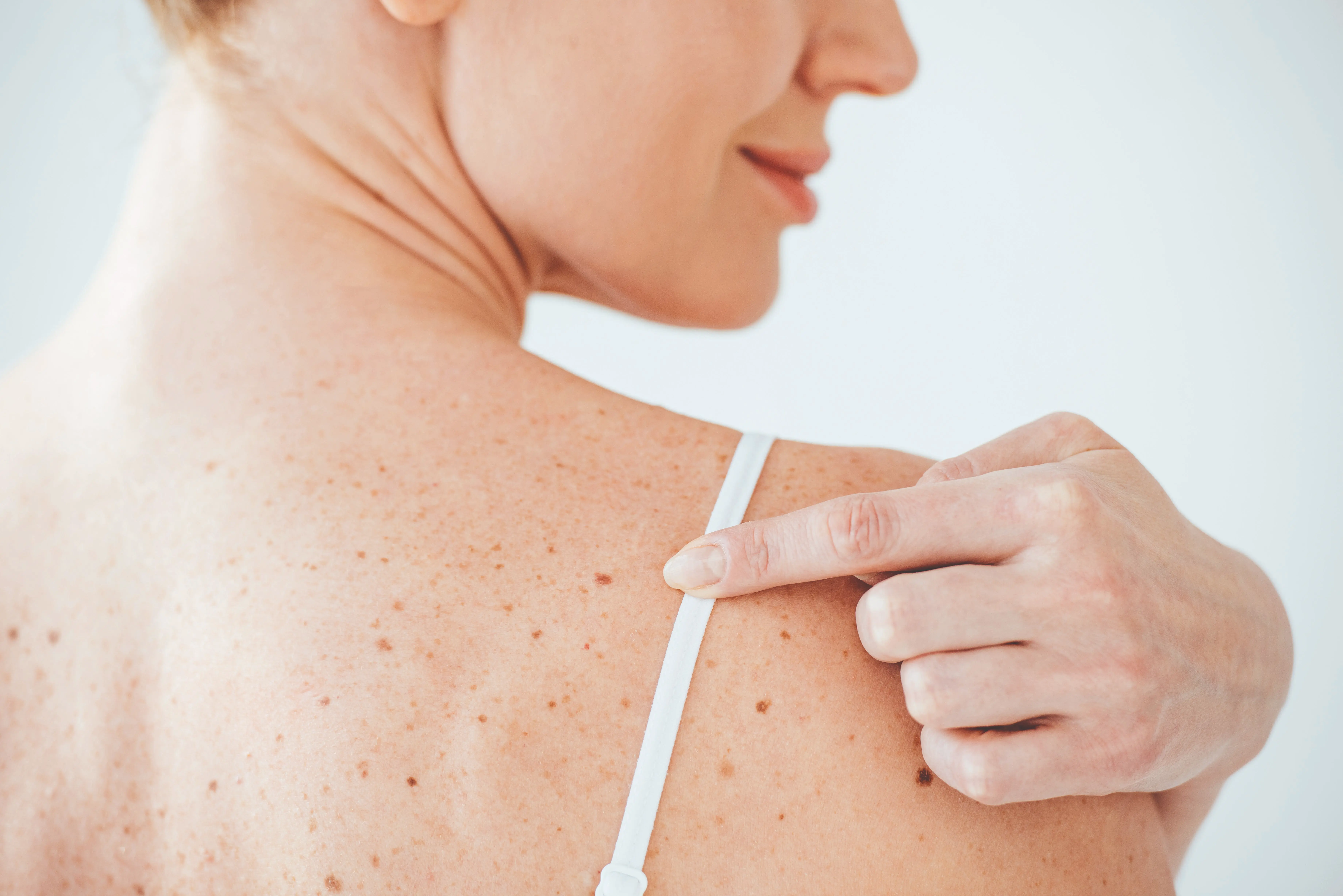
The ABCDEs of Melanoma Detection
The ABCDEs of Melanoma Detection
The ABCDEs of Melanoma Detection
Early detection saves lives. Learn the five warning signs dermatologists use to identify suspicious lesions — and why regular skin self-exams matter more than you think.
Early detection saves lives. Learn the five warning signs dermatologists use to identify suspicious lesions — and why regular skin self-exams matter more than you think.
Early detection saves lives. Learn the five warning signs dermatologists use to identify suspicious lesions — and why regular skin self-exams matter more than you think.
Novembre 12, 2025
Novembre 12, 2025
Novembre 12, 2025
Every year, over 300,000 cases of melanoma are diagnosed worldwide. In the United States alone, one person dies from melanoma every hour. Yet when detected early, melanoma has a survival rate exceeding 99%.
The difference between a life-threatening diagnosis and a treatable condition often comes down to one thing: early detection.
Understanding how to identify suspicious skin changes isn't just for dermatologists — it's critical knowledge for everyone. This guide explains the ABCDE method, a simple framework dermatologists use to evaluate skin lesions, and why regular self-examinations could save your life.
Why Early Detection Matters
Melanoma is the most dangerous form of skin cancer, capable of spreading to other organs if left untreated. But unlike many cancers, melanoma is highly visible and often detectable before it becomes life-threatening.
The statistics speak clearly:
Stage 0-I melanoma: 99% five-year survival rate
Stage II melanoma: 90-95% five-year survival rate
Stage III melanoma: 40-70% five-year survival rate
Stage IV melanoma: 10-25% five-year survival rate
Early detection doesn't just improve survival odds — it often means simpler treatment, faster recovery, and significantly lower healthcare costs. A Stage 0 melanoma typically requires only a simple outpatient procedure. Advanced melanoma may require surgery, immunotherapy, targeted therapy, or combinations of treatments.
The message is clear: catching melanoma early changes everything.
The ABCDE Method: Your First Line of Defense
Dermatologists worldwide use the ABCDE method to evaluate suspicious moles and lesions. This systematic approach helps distinguish normal moles from potentially dangerous ones.
Here's what each letter means:
A is for Asymmetry
What to look for: Imagine drawing a line through the middle of your mole. Do both halves match? If not, that's asymmetry.
Normal moles are typically symmetrical — if you fold them in half (mentally), both sides look the same.
Suspicious lesions are asymmetrical — one half looks different from the other in shape, color, or thickness.
Why it matters: Melanomas often grow unevenly, creating irregular shapes that healthy moles don't display. This asymmetry occurs because cancer cells multiply at different rates in different areas.
What to do: If a mole is clearly asymmetrical, especially if it's a new development or recent change, have it evaluated by a dermatologist.
B is for Border Irregularity
What to look for: Examine the edges of your mole. Are they smooth and well-defined, or irregular and blurred?
Normal moles have smooth, even borders that are clearly defined.
Suspicious lesions have irregular, notched, scalloped, or poorly defined borders. The edges might be ragged, and where the mole ends and normal skin begins may be unclear.
Why it matters: Melanoma cells don't grow in organized patterns. As they spread, they create irregular borders unlike the neat circles or ovals of benign moles.
What to do: Borders that are uneven, especially if combined with other ABCDE factors, warrant professional evaluation.
C is for Color Variation
What to look for: Is your mole a single, uniform color, or does it contain multiple shades?
Normal moles are typically one shade of brown or tan, consistent throughout.
Suspicious lesions display multiple colors — different shades of brown, black, red, white, or blue may appear in the same lesion.
Why it matters: Color variation suggests different types of cells or cells at different depths in the skin. This diversity is a hallmark of melanoma, where cancer cells behave differently across the lesion.
Pay special attention to:
Black or very dark areas
Red or pink patches
White areas (may indicate regression)
Blue or blue-black coloring
What to do: Any mole with noticeably different colors within it should be examined professionally.
D is for Diameter
What to look for: How large is the mole? The traditional threshold is 6 millimeters (about the size of a pencil eraser).
Normal moles are typically smaller than 6mm, though some benign moles can grow larger.
Suspicious lesions are often larger than 6mm, though melanomas can certainly be smaller.
Why it matters: While not all large moles are melanomas, and not all melanomas are large, size is a useful screening tool. Melanomas tend to grow over time, often exceeding this 6mm benchmark.
Important caveat: Don't ignore small lesions. Some melanomas are detected at sizes smaller than 6mm. If a small mole exhibits other ABCDE characteristics, it still warrants evaluation.
What to do: Monitor moles larger than 6mm closely, especially if they're growing or display other suspicious features.
E is for Evolving
What to look for: Has the mole changed over time? This is perhaps the most important warning sign.
Normal moles remain relatively stable over time. While they may slowly lighten or darken over years, dramatic changes are uncommon.
Suspicious lesions evolve — they may:
Change in size (growing or shrinking)
Change in color (darkening, lightening, or developing new colors)
Change in shape (becoming irregular)
Change in elevation (becoming raised)
Develop new symptoms (itching, bleeding, crusting)
Why it matters: Change is the single most important warning sign. A mole that has remained stable for years but suddenly changes warrants immediate evaluation.
What to do: If you notice any change in a mole — even if it doesn't meet other ABCDE criteria — have it checked. Take photos periodically to track changes over time.
Beyond the ABCDEs: Additional Warning Signs
While the ABCDE method is comprehensive, other signs shouldn't be ignored:
The "Ugly Duckling" Sign
If one mole looks notably different from all your others — standing out like an ugly duckling — it warrants attention, even if it doesn't meet ABCDE criteria.
Bleeding or Oozing
Spontaneous bleeding from a mole, especially without trauma, is a red flag.
Itching or Pain
While many benign moles occasionally itch, persistent itching or tenderness in a lesion should be evaluated.
Non-Healing Sores
A spot that looks like a sore but doesn't heal within a few weeks may be skin cancer, though not necessarily melanoma.
How to Perform a Skin Self-Exam
Early detection starts at home. Dermatologists recommend monthly self-examinations to catch changes early.
What you'll need:
A full-length mirror
A hand mirror
Good lighting
A partner (optional, for hard-to-see areas)
Step-by-step process:
1. Examine your face, ears, neck, chest, and torso
Stand in front of the mirror and carefully examine all visible skin, including behind ears and around the neck.
2. Check your arms, hands, and nails
Examine both sides of your arms, between fingers, and under nails. Raise your arms to check underarms.
3. Examine your back and buttocks
Use a hand mirror to view your back, buttocks, and back of legs. A partner can help with this.
4. Check your legs and feet
Sit down and examine the front and sides of legs, tops and soles of feet, between toes, and under toenails.
5. Examine your scalp
Use a comb or hair dryer to part hair and check your entire scalp. Again, a partner can help.
Document your findings: Take photos of any moles you want to track. This creates a baseline for detecting future changes.
When to See a Dermatologist
Seek professional evaluation if you notice:
Any mole exhibiting multiple ABCDE characteristics
Any mole that has changed recently
New moles appearing after age 30
A mole that looks significantly different from your others
Any lesion that bleeds, itches, or doesn't heal
Uncertainty about whether a spot is concerning
Don't wait months for an appointment. If you notice concerning changes, seek evaluation promptly. In many regions, dermatology wait times exceed 90 days — but solutions like Skinmed's pharmacy-based screening can deliver expert evaluation in under 72 hours.
Risk Factors: Who Should Be Extra Vigilant?
While anyone can develop melanoma, certain factors increase risk:
High-risk factors:
Fair skin, light hair, light eyes
History of sunburns, especially in childhood
Family history of melanoma
Large number of moles (50+)
Atypical moles
Weakened immune system
Previous skin cancer
UV exposure factors:
Outdoor occupation or frequent outdoor recreation
History of tanning bed use
Living in sunny climates or high altitudes
If you have multiple risk factors, annual dermatological screenings are essential, in addition to monthly self-exams.
The Role of Technology in Early Detection
Traditional dermatology relies on the trained eye of a specialist — but access to specialists is increasingly limited. Average wait times for dermatology appointments exceed 90 days in many regions, and rural communities face even longer delays.
Technology is bridging this gap.
Advanced dermoscopy equipment captures high-definition images that reveal details invisible to the naked eye. AI algorithms trained on hundreds of thousands of images can flag suspicious lesions for expert review. And telehealth platforms connect patients to board-certified dermatologists without the months-long wait.
The result: Faster screening, earlier detection, and better outcomes — all while making expert care accessible to communities previously underserved by traditional healthcare models.
Skinmed's platform combines medical-grade imaging, AI-enhanced triage, and board-certified dermatologist validation to deliver expert screening in under 72 hours, accessible through your neighborhood pharmacy.
Conclusion: Knowledge Saves Lives
The ABCDE method isn't complex medical jargon — it's a simple, practical tool anyone can use to protect their skin health. Combined with monthly self-exams and professional screenings, it represents your best defense against melanoma.
Remember:
✓ Check your skin monthly using the ABCDE framework
✓ Take photos to track changes over time
✓ Don't ignore new or changing moles
✓ Seek professional evaluation for anything suspicious
✓ Annual dermatology screenings if you're high-risk
Early detection turns a potentially deadly cancer into a highly treatable condition. The few minutes spent examining your skin each month could save your life.
Your skin is worth protecting. Start checking today.
Resources
Want to learn more?
Skin Cancer Foundation: www.skincancer.org
American Academy of Dermatology: www.aad.org
Melanoma Research Foundation: www.melanoma.org
Questions about suspicious moles?
Every year, over 300,000 cases of melanoma are diagnosed worldwide. In the United States alone, one person dies from melanoma every hour. Yet when detected early, melanoma has a survival rate exceeding 99%.
The difference between a life-threatening diagnosis and a treatable condition often comes down to one thing: early detection.
Understanding how to identify suspicious skin changes isn't just for dermatologists — it's critical knowledge for everyone. This guide explains the ABCDE method, a simple framework dermatologists use to evaluate skin lesions, and why regular self-examinations could save your life.
Why Early Detection Matters
Melanoma is the most dangerous form of skin cancer, capable of spreading to other organs if left untreated. But unlike many cancers, melanoma is highly visible and often detectable before it becomes life-threatening.
The statistics speak clearly:
Stage 0-I melanoma: 99% five-year survival rate
Stage II melanoma: 90-95% five-year survival rate
Stage III melanoma: 40-70% five-year survival rate
Stage IV melanoma: 10-25% five-year survival rate
Early detection doesn't just improve survival odds — it often means simpler treatment, faster recovery, and significantly lower healthcare costs. A Stage 0 melanoma typically requires only a simple outpatient procedure. Advanced melanoma may require surgery, immunotherapy, targeted therapy, or combinations of treatments.
The message is clear: catching melanoma early changes everything.
The ABCDE Method: Your First Line of Defense
Dermatologists worldwide use the ABCDE method to evaluate suspicious moles and lesions. This systematic approach helps distinguish normal moles from potentially dangerous ones.
Here's what each letter means:
A is for Asymmetry
What to look for: Imagine drawing a line through the middle of your mole. Do both halves match? If not, that's asymmetry.
Normal moles are typically symmetrical — if you fold them in half (mentally), both sides look the same.
Suspicious lesions are asymmetrical — one half looks different from the other in shape, color, or thickness.
Why it matters: Melanomas often grow unevenly, creating irregular shapes that healthy moles don't display. This asymmetry occurs because cancer cells multiply at different rates in different areas.
What to do: If a mole is clearly asymmetrical, especially if it's a new development or recent change, have it evaluated by a dermatologist.
B is for Border Irregularity
What to look for: Examine the edges of your mole. Are they smooth and well-defined, or irregular and blurred?
Normal moles have smooth, even borders that are clearly defined.
Suspicious lesions have irregular, notched, scalloped, or poorly defined borders. The edges might be ragged, and where the mole ends and normal skin begins may be unclear.
Why it matters: Melanoma cells don't grow in organized patterns. As they spread, they create irregular borders unlike the neat circles or ovals of benign moles.
What to do: Borders that are uneven, especially if combined with other ABCDE factors, warrant professional evaluation.
C is for Color Variation
What to look for: Is your mole a single, uniform color, or does it contain multiple shades?
Normal moles are typically one shade of brown or tan, consistent throughout.
Suspicious lesions display multiple colors — different shades of brown, black, red, white, or blue may appear in the same lesion.
Why it matters: Color variation suggests different types of cells or cells at different depths in the skin. This diversity is a hallmark of melanoma, where cancer cells behave differently across the lesion.
Pay special attention to:
Black or very dark areas
Red or pink patches
White areas (may indicate regression)
Blue or blue-black coloring
What to do: Any mole with noticeably different colors within it should be examined professionally.
D is for Diameter
What to look for: How large is the mole? The traditional threshold is 6 millimeters (about the size of a pencil eraser).
Normal moles are typically smaller than 6mm, though some benign moles can grow larger.
Suspicious lesions are often larger than 6mm, though melanomas can certainly be smaller.
Why it matters: While not all large moles are melanomas, and not all melanomas are large, size is a useful screening tool. Melanomas tend to grow over time, often exceeding this 6mm benchmark.
Important caveat: Don't ignore small lesions. Some melanomas are detected at sizes smaller than 6mm. If a small mole exhibits other ABCDE characteristics, it still warrants evaluation.
What to do: Monitor moles larger than 6mm closely, especially if they're growing or display other suspicious features.
E is for Evolving
What to look for: Has the mole changed over time? This is perhaps the most important warning sign.
Normal moles remain relatively stable over time. While they may slowly lighten or darken over years, dramatic changes are uncommon.
Suspicious lesions evolve — they may:
Change in size (growing or shrinking)
Change in color (darkening, lightening, or developing new colors)
Change in shape (becoming irregular)
Change in elevation (becoming raised)
Develop new symptoms (itching, bleeding, crusting)
Why it matters: Change is the single most important warning sign. A mole that has remained stable for years but suddenly changes warrants immediate evaluation.
What to do: If you notice any change in a mole — even if it doesn't meet other ABCDE criteria — have it checked. Take photos periodically to track changes over time.
Beyond the ABCDEs: Additional Warning Signs
While the ABCDE method is comprehensive, other signs shouldn't be ignored:
The "Ugly Duckling" Sign
If one mole looks notably different from all your others — standing out like an ugly duckling — it warrants attention, even if it doesn't meet ABCDE criteria.
Bleeding or Oozing
Spontaneous bleeding from a mole, especially without trauma, is a red flag.
Itching or Pain
While many benign moles occasionally itch, persistent itching or tenderness in a lesion should be evaluated.
Non-Healing Sores
A spot that looks like a sore but doesn't heal within a few weeks may be skin cancer, though not necessarily melanoma.
How to Perform a Skin Self-Exam
Early detection starts at home. Dermatologists recommend monthly self-examinations to catch changes early.
What you'll need:
A full-length mirror
A hand mirror
Good lighting
A partner (optional, for hard-to-see areas)
Step-by-step process:
1. Examine your face, ears, neck, chest, and torso
Stand in front of the mirror and carefully examine all visible skin, including behind ears and around the neck.
2. Check your arms, hands, and nails
Examine both sides of your arms, between fingers, and under nails. Raise your arms to check underarms.
3. Examine your back and buttocks
Use a hand mirror to view your back, buttocks, and back of legs. A partner can help with this.
4. Check your legs and feet
Sit down and examine the front and sides of legs, tops and soles of feet, between toes, and under toenails.
5. Examine your scalp
Use a comb or hair dryer to part hair and check your entire scalp. Again, a partner can help.
Document your findings: Take photos of any moles you want to track. This creates a baseline for detecting future changes.
When to See a Dermatologist
Seek professional evaluation if you notice:
Any mole exhibiting multiple ABCDE characteristics
Any mole that has changed recently
New moles appearing after age 30
A mole that looks significantly different from your others
Any lesion that bleeds, itches, or doesn't heal
Uncertainty about whether a spot is concerning
Don't wait months for an appointment. If you notice concerning changes, seek evaluation promptly. In many regions, dermatology wait times exceed 90 days — but solutions like Skinmed's pharmacy-based screening can deliver expert evaluation in under 72 hours.
Risk Factors: Who Should Be Extra Vigilant?
While anyone can develop melanoma, certain factors increase risk:
High-risk factors:
Fair skin, light hair, light eyes
History of sunburns, especially in childhood
Family history of melanoma
Large number of moles (50+)
Atypical moles
Weakened immune system
Previous skin cancer
UV exposure factors:
Outdoor occupation or frequent outdoor recreation
History of tanning bed use
Living in sunny climates or high altitudes
If you have multiple risk factors, annual dermatological screenings are essential, in addition to monthly self-exams.
The Role of Technology in Early Detection
Traditional dermatology relies on the trained eye of a specialist — but access to specialists is increasingly limited. Average wait times for dermatology appointments exceed 90 days in many regions, and rural communities face even longer delays.
Technology is bridging this gap.
Advanced dermoscopy equipment captures high-definition images that reveal details invisible to the naked eye. AI algorithms trained on hundreds of thousands of images can flag suspicious lesions for expert review. And telehealth platforms connect patients to board-certified dermatologists without the months-long wait.
The result: Faster screening, earlier detection, and better outcomes — all while making expert care accessible to communities previously underserved by traditional healthcare models.
Skinmed's platform combines medical-grade imaging, AI-enhanced triage, and board-certified dermatologist validation to deliver expert screening in under 72 hours, accessible through your neighborhood pharmacy.
Conclusion: Knowledge Saves Lives
The ABCDE method isn't complex medical jargon — it's a simple, practical tool anyone can use to protect their skin health. Combined with monthly self-exams and professional screenings, it represents your best defense against melanoma.
Remember:
✓ Check your skin monthly using the ABCDE framework
✓ Take photos to track changes over time
✓ Don't ignore new or changing moles
✓ Seek professional evaluation for anything suspicious
✓ Annual dermatology screenings if you're high-risk
Early detection turns a potentially deadly cancer into a highly treatable condition. The few minutes spent examining your skin each month could save your life.
Your skin is worth protecting. Start checking today.
Resources
Want to learn more?
Skin Cancer Foundation: www.skincancer.org
American Academy of Dermatology: www.aad.org
Melanoma Research Foundation: www.melanoma.org
Questions about suspicious moles?
Every year, over 300,000 cases of melanoma are diagnosed worldwide. In the United States alone, one person dies from melanoma every hour. Yet when detected early, melanoma has a survival rate exceeding 99%.
The difference between a life-threatening diagnosis and a treatable condition often comes down to one thing: early detection.
Understanding how to identify suspicious skin changes isn't just for dermatologists — it's critical knowledge for everyone. This guide explains the ABCDE method, a simple framework dermatologists use to evaluate skin lesions, and why regular self-examinations could save your life.
Why Early Detection Matters
Melanoma is the most dangerous form of skin cancer, capable of spreading to other organs if left untreated. But unlike many cancers, melanoma is highly visible and often detectable before it becomes life-threatening.
The statistics speak clearly:
Stage 0-I melanoma: 99% five-year survival rate
Stage II melanoma: 90-95% five-year survival rate
Stage III melanoma: 40-70% five-year survival rate
Stage IV melanoma: 10-25% five-year survival rate
Early detection doesn't just improve survival odds — it often means simpler treatment, faster recovery, and significantly lower healthcare costs. A Stage 0 melanoma typically requires only a simple outpatient procedure. Advanced melanoma may require surgery, immunotherapy, targeted therapy, or combinations of treatments.
The message is clear: catching melanoma early changes everything.
The ABCDE Method: Your First Line of Defense
Dermatologists worldwide use the ABCDE method to evaluate suspicious moles and lesions. This systematic approach helps distinguish normal moles from potentially dangerous ones.
Here's what each letter means:
A is for Asymmetry
What to look for: Imagine drawing a line through the middle of your mole. Do both halves match? If not, that's asymmetry.
Normal moles are typically symmetrical — if you fold them in half (mentally), both sides look the same.
Suspicious lesions are asymmetrical — one half looks different from the other in shape, color, or thickness.
Why it matters: Melanomas often grow unevenly, creating irregular shapes that healthy moles don't display. This asymmetry occurs because cancer cells multiply at different rates in different areas.
What to do: If a mole is clearly asymmetrical, especially if it's a new development or recent change, have it evaluated by a dermatologist.
B is for Border Irregularity
What to look for: Examine the edges of your mole. Are they smooth and well-defined, or irregular and blurred?
Normal moles have smooth, even borders that are clearly defined.
Suspicious lesions have irregular, notched, scalloped, or poorly defined borders. The edges might be ragged, and where the mole ends and normal skin begins may be unclear.
Why it matters: Melanoma cells don't grow in organized patterns. As they spread, they create irregular borders unlike the neat circles or ovals of benign moles.
What to do: Borders that are uneven, especially if combined with other ABCDE factors, warrant professional evaluation.
C is for Color Variation
What to look for: Is your mole a single, uniform color, or does it contain multiple shades?
Normal moles are typically one shade of brown or tan, consistent throughout.
Suspicious lesions display multiple colors — different shades of brown, black, red, white, or blue may appear in the same lesion.
Why it matters: Color variation suggests different types of cells or cells at different depths in the skin. This diversity is a hallmark of melanoma, where cancer cells behave differently across the lesion.
Pay special attention to:
Black or very dark areas
Red or pink patches
White areas (may indicate regression)
Blue or blue-black coloring
What to do: Any mole with noticeably different colors within it should be examined professionally.
D is for Diameter
What to look for: How large is the mole? The traditional threshold is 6 millimeters (about the size of a pencil eraser).
Normal moles are typically smaller than 6mm, though some benign moles can grow larger.
Suspicious lesions are often larger than 6mm, though melanomas can certainly be smaller.
Why it matters: While not all large moles are melanomas, and not all melanomas are large, size is a useful screening tool. Melanomas tend to grow over time, often exceeding this 6mm benchmark.
Important caveat: Don't ignore small lesions. Some melanomas are detected at sizes smaller than 6mm. If a small mole exhibits other ABCDE characteristics, it still warrants evaluation.
What to do: Monitor moles larger than 6mm closely, especially if they're growing or display other suspicious features.
E is for Evolving
What to look for: Has the mole changed over time? This is perhaps the most important warning sign.
Normal moles remain relatively stable over time. While they may slowly lighten or darken over years, dramatic changes are uncommon.
Suspicious lesions evolve — they may:
Change in size (growing or shrinking)
Change in color (darkening, lightening, or developing new colors)
Change in shape (becoming irregular)
Change in elevation (becoming raised)
Develop new symptoms (itching, bleeding, crusting)
Why it matters: Change is the single most important warning sign. A mole that has remained stable for years but suddenly changes warrants immediate evaluation.
What to do: If you notice any change in a mole — even if it doesn't meet other ABCDE criteria — have it checked. Take photos periodically to track changes over time.
Beyond the ABCDEs: Additional Warning Signs
While the ABCDE method is comprehensive, other signs shouldn't be ignored:
The "Ugly Duckling" Sign
If one mole looks notably different from all your others — standing out like an ugly duckling — it warrants attention, even if it doesn't meet ABCDE criteria.
Bleeding or Oozing
Spontaneous bleeding from a mole, especially without trauma, is a red flag.
Itching or Pain
While many benign moles occasionally itch, persistent itching or tenderness in a lesion should be evaluated.
Non-Healing Sores
A spot that looks like a sore but doesn't heal within a few weeks may be skin cancer, though not necessarily melanoma.
How to Perform a Skin Self-Exam
Early detection starts at home. Dermatologists recommend monthly self-examinations to catch changes early.
What you'll need:
A full-length mirror
A hand mirror
Good lighting
A partner (optional, for hard-to-see areas)
Step-by-step process:
1. Examine your face, ears, neck, chest, and torso
Stand in front of the mirror and carefully examine all visible skin, including behind ears and around the neck.
2. Check your arms, hands, and nails
Examine both sides of your arms, between fingers, and under nails. Raise your arms to check underarms.
3. Examine your back and buttocks
Use a hand mirror to view your back, buttocks, and back of legs. A partner can help with this.
4. Check your legs and feet
Sit down and examine the front and sides of legs, tops and soles of feet, between toes, and under toenails.
5. Examine your scalp
Use a comb or hair dryer to part hair and check your entire scalp. Again, a partner can help.
Document your findings: Take photos of any moles you want to track. This creates a baseline for detecting future changes.
When to See a Dermatologist
Seek professional evaluation if you notice:
Any mole exhibiting multiple ABCDE characteristics
Any mole that has changed recently
New moles appearing after age 30
A mole that looks significantly different from your others
Any lesion that bleeds, itches, or doesn't heal
Uncertainty about whether a spot is concerning
Don't wait months for an appointment. If you notice concerning changes, seek evaluation promptly. In many regions, dermatology wait times exceed 90 days — but solutions like Skinmed's pharmacy-based screening can deliver expert evaluation in under 72 hours.
Risk Factors: Who Should Be Extra Vigilant?
While anyone can develop melanoma, certain factors increase risk:
High-risk factors:
Fair skin, light hair, light eyes
History of sunburns, especially in childhood
Family history of melanoma
Large number of moles (50+)
Atypical moles
Weakened immune system
Previous skin cancer
UV exposure factors:
Outdoor occupation or frequent outdoor recreation
History of tanning bed use
Living in sunny climates or high altitudes
If you have multiple risk factors, annual dermatological screenings are essential, in addition to monthly self-exams.
The Role of Technology in Early Detection
Traditional dermatology relies on the trained eye of a specialist — but access to specialists is increasingly limited. Average wait times for dermatology appointments exceed 90 days in many regions, and rural communities face even longer delays.
Technology is bridging this gap.
Advanced dermoscopy equipment captures high-definition images that reveal details invisible to the naked eye. AI algorithms trained on hundreds of thousands of images can flag suspicious lesions for expert review. And telehealth platforms connect patients to board-certified dermatologists without the months-long wait.
The result: Faster screening, earlier detection, and better outcomes — all while making expert care accessible to communities previously underserved by traditional healthcare models.
Skinmed's platform combines medical-grade imaging, AI-enhanced triage, and board-certified dermatologist validation to deliver expert screening in under 72 hours, accessible through your neighborhood pharmacy.
Conclusion: Knowledge Saves Lives
The ABCDE method isn't complex medical jargon — it's a simple, practical tool anyone can use to protect their skin health. Combined with monthly self-exams and professional screenings, it represents your best defense against melanoma.
Remember:
✓ Check your skin monthly using the ABCDE framework
✓ Take photos to track changes over time
✓ Don't ignore new or changing moles
✓ Seek professional evaluation for anything suspicious
✓ Annual dermatology screenings if you're high-risk
Early detection turns a potentially deadly cancer into a highly treatable condition. The few minutes spent examining your skin each month could save your life.
Your skin is worth protecting. Start checking today.
Resources
Want to learn more?
Skin Cancer Foundation: www.skincancer.org
American Academy of Dermatology: www.aad.org
Melanoma Research Foundation: www.melanoma.org
Questions about suspicious moles?
— Jennifer Gauthier, CEO & Co-Founder
— Jennifer Gauthier, CEO & Co-Founder
— Jennifer Gauthier, CEO & Co-Founder
our journal
our journal
our journal
More insights for you.
More insights for you.
More insights for you.
Explore more reflections, guidance, and practical tools to support your growth and well-being.
Explore more reflections, guidance, and practical tools to support your growth and well-being.
Explore more reflections, guidance, and practical tools to support your growth and well-being.

Join us in January as we showcase how AI-enhanced telehealth is democratizing dermatology — from the world's largest tech event to healthcare's premier investment symposium.
Join us in January as we showcase how AI-enhanced telehealth is democratizing dermatology — from the world's largest tech event to healthcare's premier investment symposium.
Join us in January as we showcase how AI-enhanced telehealth is democratizing dermatology — from the world's largest tech event to healthcare's premier investment symposium.
Early detection saves lives. Learn the five warning signs dermatologists use to identify suspicious lesions — and why regular skin self-exams matter more than you think.
Early detection saves lives. Learn the five warning signs dermatologists use to identify suspicious lesions — and why regular skin self-exams matter more than you think.
Early detection saves lives. Learn the five warning signs dermatologists use to identify suspicious lesions — and why regular skin self-exams matter more than you think.
Your questions.
Answered.
Not sure where to start? These answers might help you feel more confident as you begin.
Didn’t find your answer? Send us a message — we’ll respond with care and clarity.
How does Skinmed work?
Skinmed makes expert dermatology accessible through your local pharmacy. Simply visit a Skinmed-enabled location where a trained pharmacist will capture high-definition images of your skin concern using medical-grade equipment. Your images are securely transmitted to board-certified dermatologists who review every case and provide a detailed report within 48 hours.
If specialist care is needed, we coordinate referrals and follow-up. No appointments, no long waits — just accessible expert care when you need it.
How does Skinmed work?
Skinmed makes expert dermatology accessible through your local pharmacy. Simply visit a Skinmed-enabled location where a trained pharmacist will capture high-definition images of your skin concern using medical-grade equipment. Your images are securely transmitted to board-certified dermatologists who review every case and provide a detailed report within 48 hours.
If specialist care is needed, we coordinate referrals and follow-up. No appointments, no long waits — just accessible expert care when you need it.
Is Skinmed available in my area?
Is Skinmed available in my area?
Skinmed currently operates through 1000+ partner pharmacies across France, with rapid expansion underway.
US pilot programs are launching in 2026. To find a Skinmed-enabled pharmacy near you or to express interest in bringing Skinmed to your community, contact us directly.
How accurate is the diagnosis?
How accurate is the diagnosis?
Every Skinmed diagnosis undergoes mandatory review by board-certified dermatologists registered with medical authorities. Our AI-powered pre-screening assists triage, but 100% of final diagnoses are validated by human experts.
Our 2024 clinical study demonstrates concordance between Skinmed diagnoses, in-person dermatology consultations, and pathology results.
Quality and accuracy are never compromised for speed.
What conditions can Skinmed screen for?
What conditions can Skinmed screen for?
Skinmed screens for a wide range of skin conditions including:
Melanoma and other skin cancers (basal cell, squamous cell)
Pre-cancerous lesions (actinic keratosis)
Atypical moles requiring monitoring
Common dermatological conditions (eczema, psoriasis, rosacea)
Suspicious lesions requiring specialist evaluation
Our platform provides risk-stratified recommendations: routine monitoring, primary care follow-up, dermatologist consultation, or urgent specialist referral.
What is Skinmed's regulatory status?
What is Skinmed's regulatory status?
Skinmed operates as a GDPR-compliant telehealth platform in France.
All dermatologists are licensed and registered with French medical authorities (RPPS).
The AI technology (developed by ANAPIX Medical) is currently pursuing FDA Class IIb device MDR (2017/745) certification targeted for Q2. The AI technology is not cleared by the FDA for clinical diagnostic use in the USA.
Skinmed dermatology platform is considered non-medical MDDS.
Our platform already meets strict European data protection standards and follows clinical best practices for telehealth delivery.
Where can we meet the Skinmed team?
Where can we meet the Skinmed team?
Join us at these upcoming events in January 2026:
🎯 CES 2026 - Las Vegas
January 6-9, 2026
Digital Health Summit
Meet us at the world's premier technology event to explore how Skinmed is democratizing dermatology through AI-enhanced telehealth.
💼 J.P. Morgan Healthcare Conference - San Francisco
January 12-15, 2026
44th Annual Healthcare Investment Symposium
Schedule a meeting to discuss investment opportunities, partnership strategies, and our global expansion roadmap.
Your questions.
Answered.
Not sure where to start? These answers might help you feel more confident as you begin.
How does Skinmed work?
Skinmed makes expert dermatology accessible through your local pharmacy. Simply visit a Skinmed-enabled location where a trained pharmacist will capture high-definition images of your skin concern using medical-grade equipment. Your images are securely transmitted to board-certified dermatologists who review every case and provide a detailed report within 48 hours.
If specialist care is needed, we coordinate referrals and follow-up. No appointments, no long waits — just accessible expert care when you need it.
How does Skinmed work?
Skinmed makes expert dermatology accessible through your local pharmacy. Simply visit a Skinmed-enabled location where a trained pharmacist will capture high-definition images of your skin concern using medical-grade equipment. Your images are securely transmitted to board-certified dermatologists who review every case and provide a detailed report within 48 hours.
If specialist care is needed, we coordinate referrals and follow-up. No appointments, no long waits — just accessible expert care when you need it.
Is Skinmed available in my area?
Is Skinmed available in my area?
Skinmed currently operates through 1000+ partner pharmacies across France, with rapid expansion underway.
US pilot programs are launching in 2026. To find a Skinmed-enabled pharmacy near you or to express interest in bringing Skinmed to your community, contact us directly.
How accurate is the diagnosis?
How accurate is the diagnosis?
Every Skinmed diagnosis undergoes mandatory review by board-certified dermatologists registered with medical authorities. Our AI-powered pre-screening assists triage, but 100% of final diagnoses are validated by human experts.
Our 2024 clinical study demonstrates concordance between Skinmed diagnoses, in-person dermatology consultations, and pathology results.
Quality and accuracy are never compromised for speed.
What conditions can Skinmed screen for?
What conditions can Skinmed screen for?
Skinmed screens for a wide range of skin conditions including:
Melanoma and other skin cancers (basal cell, squamous cell)
Pre-cancerous lesions (actinic keratosis)
Atypical moles requiring monitoring
Common dermatological conditions (eczema, psoriasis, rosacea)
Suspicious lesions requiring specialist evaluation
Our platform provides risk-stratified recommendations: routine monitoring, primary care follow-up, dermatologist consultation, or urgent specialist referral.
What is Skinmed's regulatory status?
What is Skinmed's regulatory status?
Skinmed operates as a GDPR-compliant telehealth platform in France.
All dermatologists are licensed and registered with French medical authorities (RPPS).
The AI technology (developed by ANAPIX Medical) is currently pursuing FDA Class IIb device MDR (2017/745) certification targeted for Q2. The AI technology is not cleared by the FDA for clinical diagnostic use in the USA.
Skinmed dermatology platform is considered non-medical MDDS.
Our platform already meets strict European data protection standards and follows clinical best practices for telehealth delivery.
Where can we meet the Skinmed team?
Where can we meet the Skinmed team?
Join us at these upcoming events in January 2026:
🎯 CES 2026 - Las Vegas
January 6-9, 2026
Digital Health Summit
Meet us at the world's premier technology event to explore how Skinmed is democratizing dermatology through AI-enhanced telehealth.
💼 J.P. Morgan Healthcare Conference - San Francisco
January 12-15, 2026
44th Annual Healthcare Investment Symposium
Schedule a meeting to discuss investment opportunities, partnership strategies, and our global expansion roadmap.
Didn’t find your answer? Send us a message — we’ll respond with care and clarity.
Your questions.
Answered.
Not sure where to start? These answers might help you feel more confident as you begin.
Didn’t find your answer? Send us a message — we’ll respond with care and clarity.
How does Skinmed work?
Skinmed makes expert dermatology accessible through your local pharmacy. Simply visit a Skinmed-enabled location where a trained pharmacist will capture high-definition images of your skin concern using medical-grade equipment. Your images are securely transmitted to board-certified dermatologists who review every case and provide a detailed report within 48 hours.
If specialist care is needed, we coordinate referrals and follow-up. No appointments, no long waits — just accessible expert care when you need it.
How does Skinmed work?
Skinmed makes expert dermatology accessible through your local pharmacy. Simply visit a Skinmed-enabled location where a trained pharmacist will capture high-definition images of your skin concern using medical-grade equipment. Your images are securely transmitted to board-certified dermatologists who review every case and provide a detailed report within 48 hours.
If specialist care is needed, we coordinate referrals and follow-up. No appointments, no long waits — just accessible expert care when you need it.
Is Skinmed available in my area?
Is Skinmed available in my area?
Skinmed currently operates through 1000+ partner pharmacies across France, with rapid expansion underway.
US pilot programs are launching in 2026. To find a Skinmed-enabled pharmacy near you or to express interest in bringing Skinmed to your community, contact us directly.
How accurate is the diagnosis?
How accurate is the diagnosis?
Every Skinmed diagnosis undergoes mandatory review by board-certified dermatologists registered with medical authorities. Our AI-powered pre-screening assists triage, but 100% of final diagnoses are validated by human experts.
Our 2024 clinical study demonstrates concordance between Skinmed diagnoses, in-person dermatology consultations, and pathology results.
Quality and accuracy are never compromised for speed.
What conditions can Skinmed screen for?
What conditions can Skinmed screen for?
Skinmed screens for a wide range of skin conditions including:
Melanoma and other skin cancers (basal cell, squamous cell)
Pre-cancerous lesions (actinic keratosis)
Atypical moles requiring monitoring
Common dermatological conditions (eczema, psoriasis, rosacea)
Suspicious lesions requiring specialist evaluation
Our platform provides risk-stratified recommendations: routine monitoring, primary care follow-up, dermatologist consultation, or urgent specialist referral.
What is Skinmed's regulatory status?
What is Skinmed's regulatory status?
Skinmed operates as a GDPR-compliant telehealth platform in France.
All dermatologists are licensed and registered with French medical authorities (RPPS).
The AI technology (developed by ANAPIX Medical) is currently pursuing FDA Class IIb device MDR (2017/745) certification targeted for Q2. The AI technology is not cleared by the FDA for clinical diagnostic use in the USA.
Skinmed dermatology platform is considered non-medical MDDS.
Our platform already meets strict European data protection standards and follows clinical best practices for telehealth delivery.
Where can we meet the Skinmed team?
Where can we meet the Skinmed team?
Join us at these upcoming events in January 2026:
🎯 CES 2026 - Las Vegas
January 6-9, 2026
Digital Health Summit
Meet us at the world's premier technology event to explore how Skinmed is democratizing dermatology through AI-enhanced telehealth.
💼 J.P. Morgan Healthcare Conference - San Francisco
January 12-15, 2026
44th Annual Healthcare Investment Symposium
Schedule a meeting to discuss investment opportunities, partnership strategies, and our global expansion roadmap.